Switch over to our new blog! • ¡Pásese a nuestro nuevo blog!

The renewed version of our blog, with more features, a richer design, and available in nine languages, can be read here: https://wangriver.com

The new version also includes the old posts, often in expanded form. If you are curious about the updated version of this post, replace “riowang.blogspot.com/” in the URL with “riowang.studiolum.com/”, and the new link will most likely lead you there.


La versión renovada de nuestro blog, con más herramientas, un diseño más rico y disponible en nueve idiomas, se puede leer aquí: https://riowang.com

La nueva versión también incluye las publicaciones antiguas, a menudo en una forma ampliada. Si tiene curiosidad por la versión actualizada de esta entrada, sustituya «riowang.blogspot.com/» en la URL por «riowang.studiolum.com/es/», y el nuevo enlace probablemente le llevará allí.

Mostrando entradas con la etiqueta newspaper. Mostrar todas las entradas

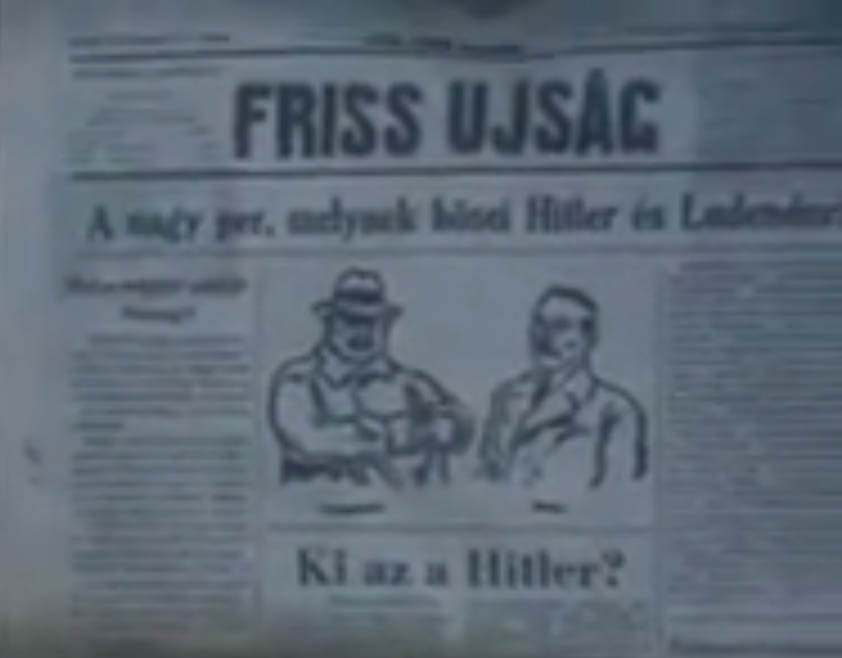
But who is that Hittler?

“Here’s the Fresh News! The Fresh News! The great trial, whose heroes are Hitler and Ludendorff! Hitler and Ludendorff!”
“But who is that Hitler?”

Pál Sándor: Régi idők focija (Old-Time Football), 1973


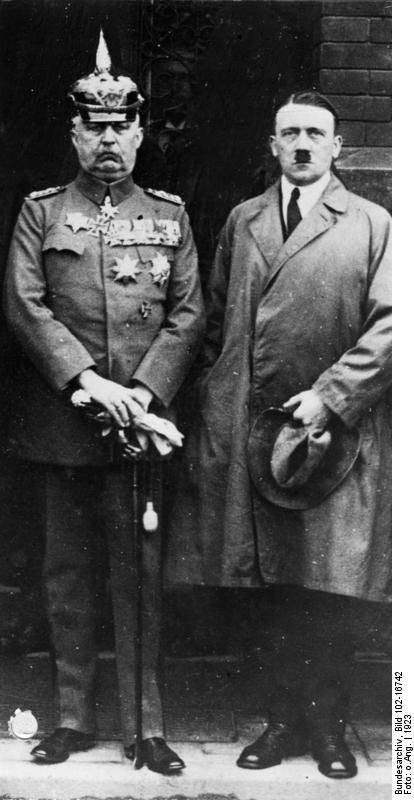
Because every child knows who Ludendorff is. Chief of the General Staff of Generalfeldmarschall von Hindenburg in the recently ended Great War, initiator of the unrestricted submarine war against Great Britain, by which he attained a US declaration of war, and inventor of the idea of sending Lenin home on a German armored train to destabilize Russia, and we know how that turned out. And most recently, on 8-9 November 1923, one of the leaders of the so-called Munich Beer Hall Putsch aimed at overthrowing the Weimar Republic.

Hitler and Ludendorff! Hitler and Ludendorff!

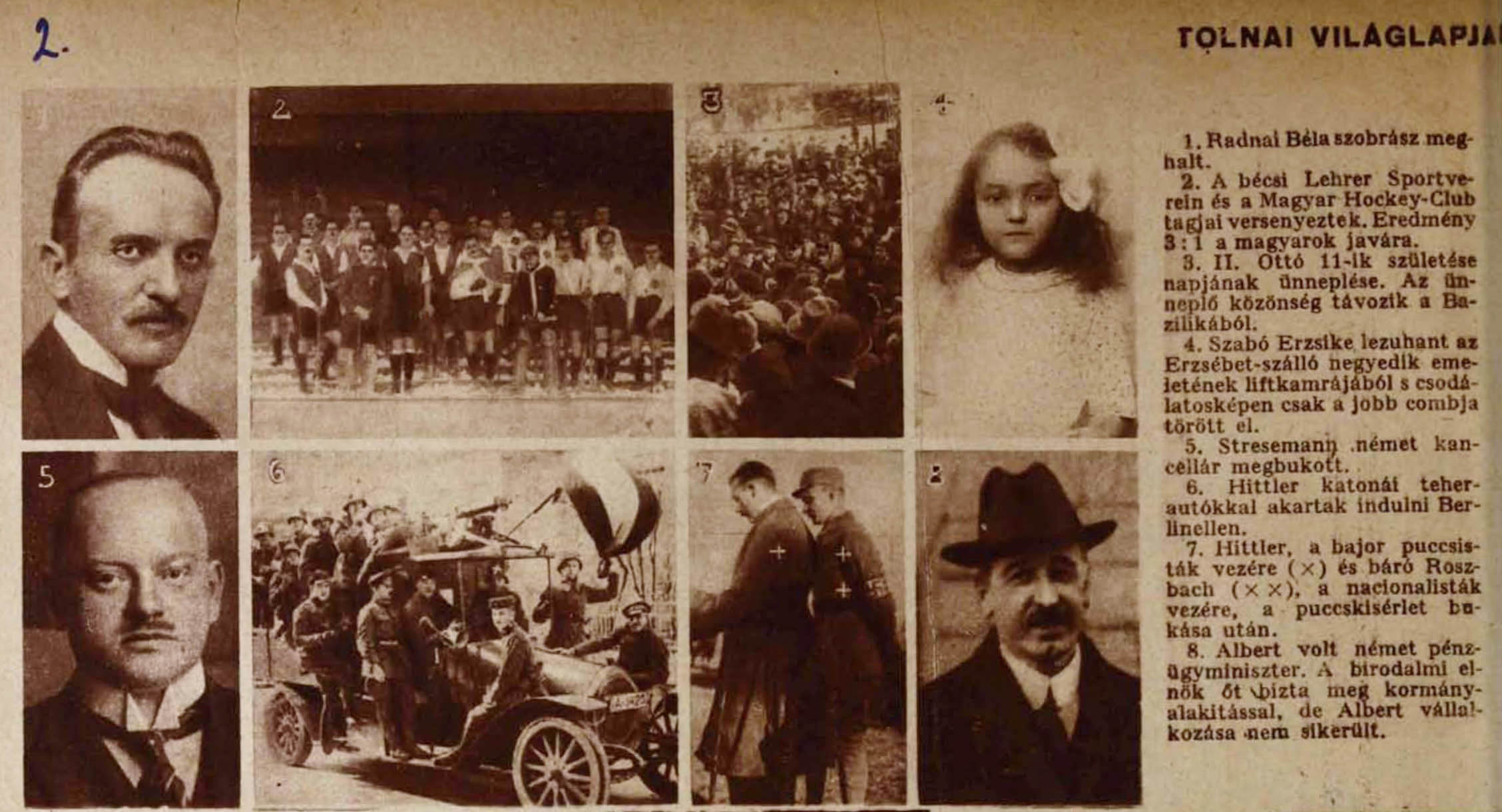
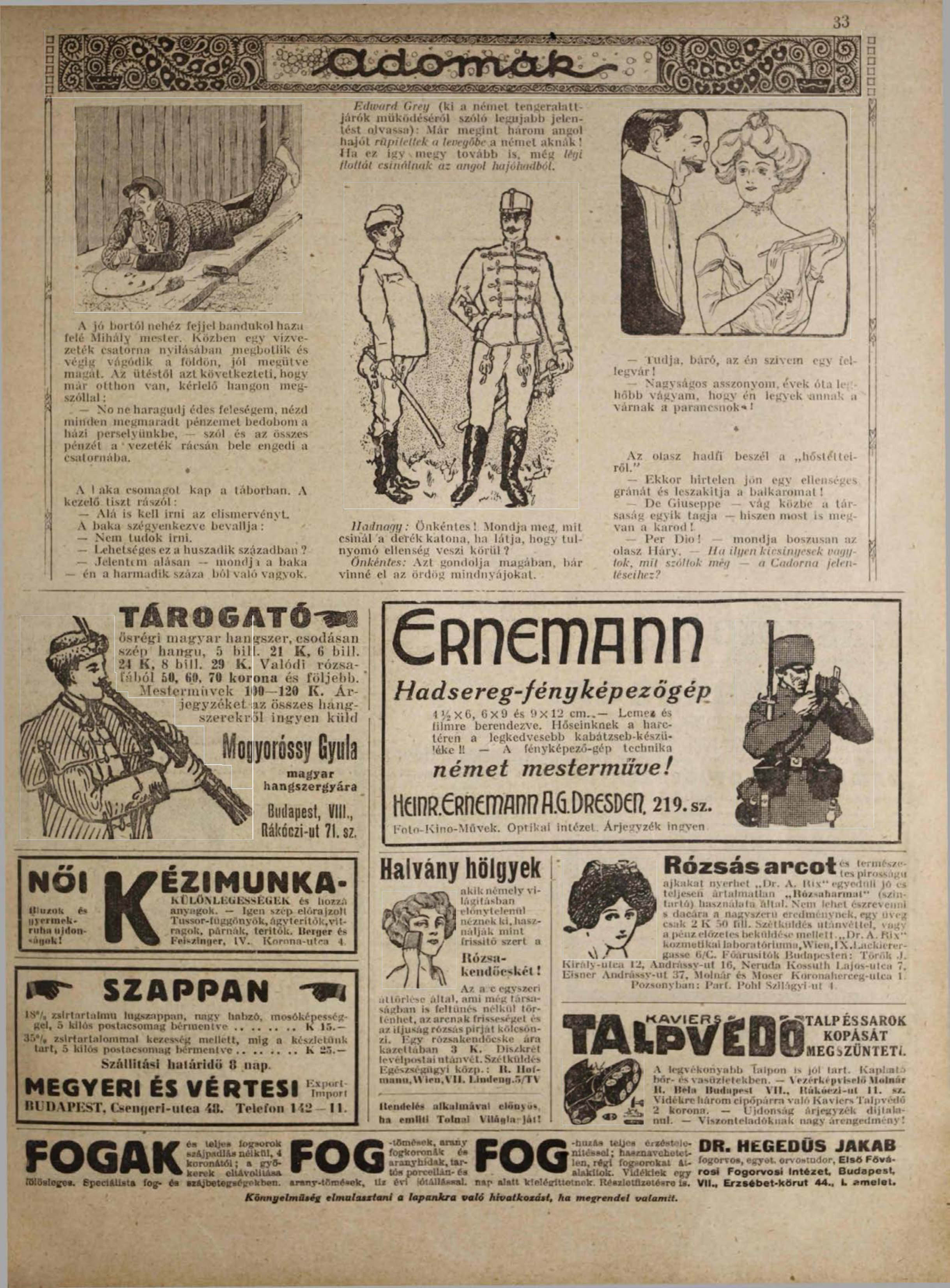
But who is this Hitler, of whom the Hungarian monthly Tolnai Világlapja cannot even find a good photo to publish?

Tolnai Világlapja, 1923

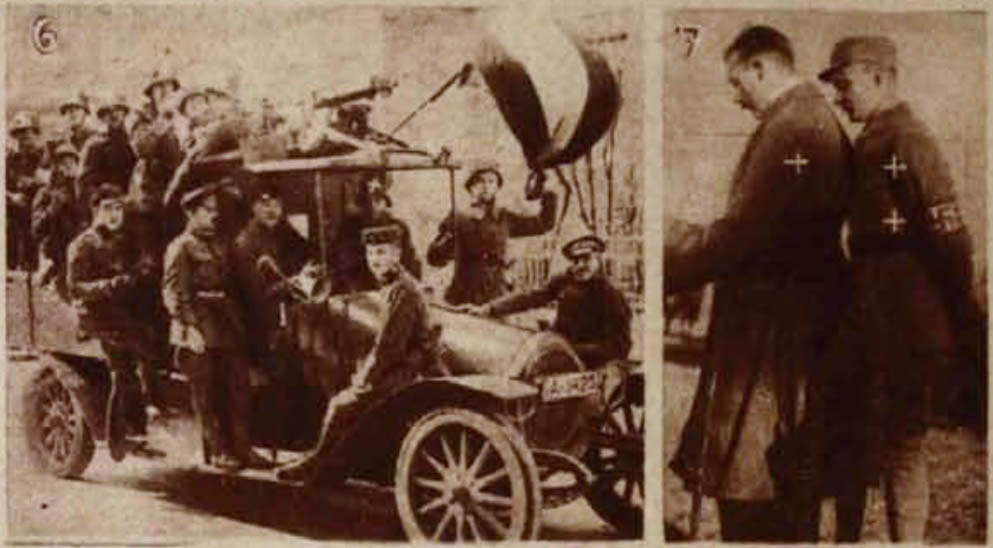
“6. The soldiers of Hittler wanted to march against Berlin with trucks. 7. Hittler, the leader of the Bavarian coup ( × ) and Baron Roszbach ( ×× ), leader of the nationalists, after the failure of the coup attempt”


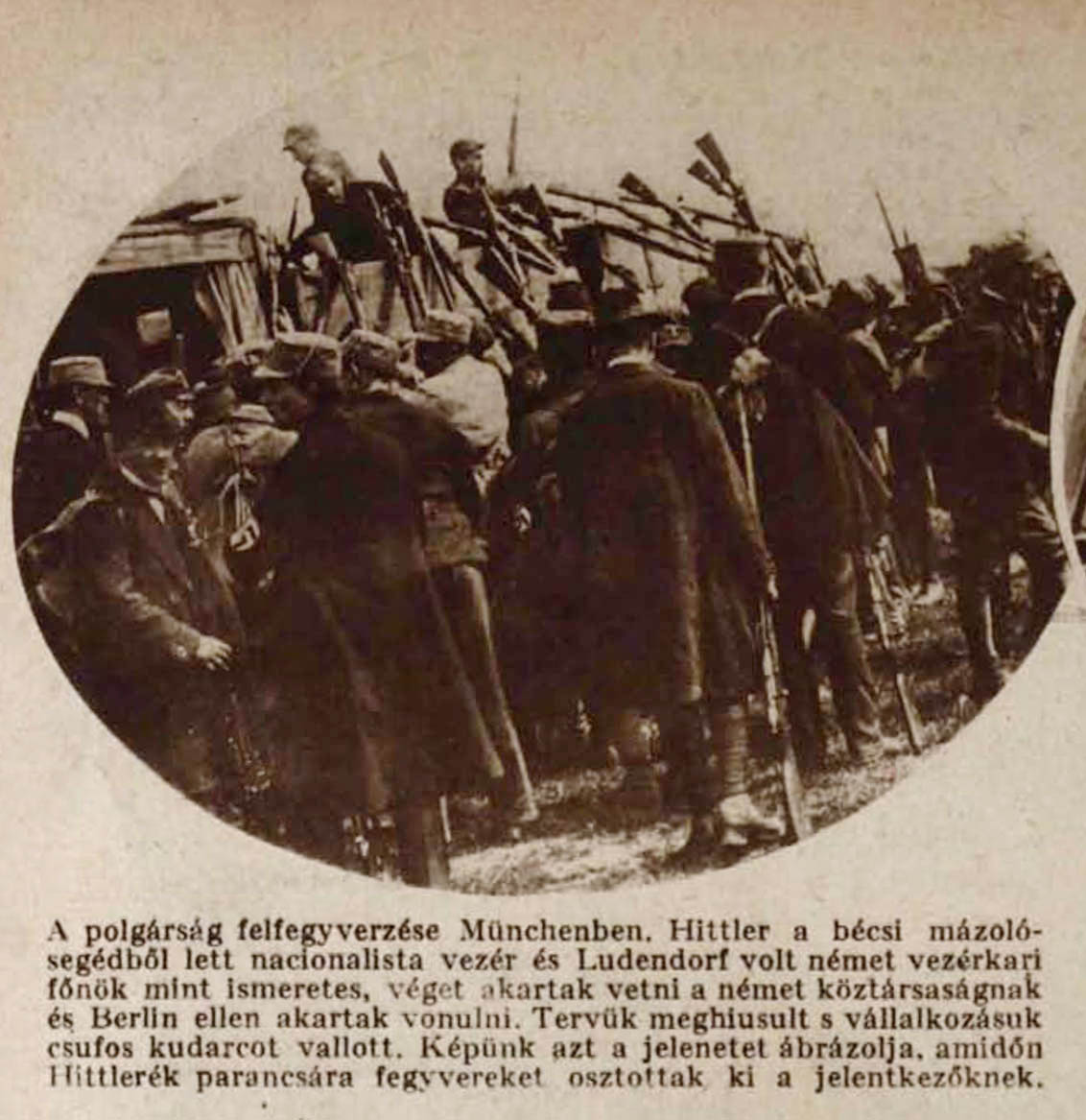
“The arming of the citizens of Munich. Hittler, in whom a mere paint slopper became a nationalist leader, and Ludendorf, the former German Chief of General Staff, as is well known, wanted to put an end to the German Republic, and march against Berlin. Their plan has failed, and their undertaking ended in a miserable fiasco. Our photo shows the scene, where, on Hittler’s command, they distribute weapons to the applicants.”

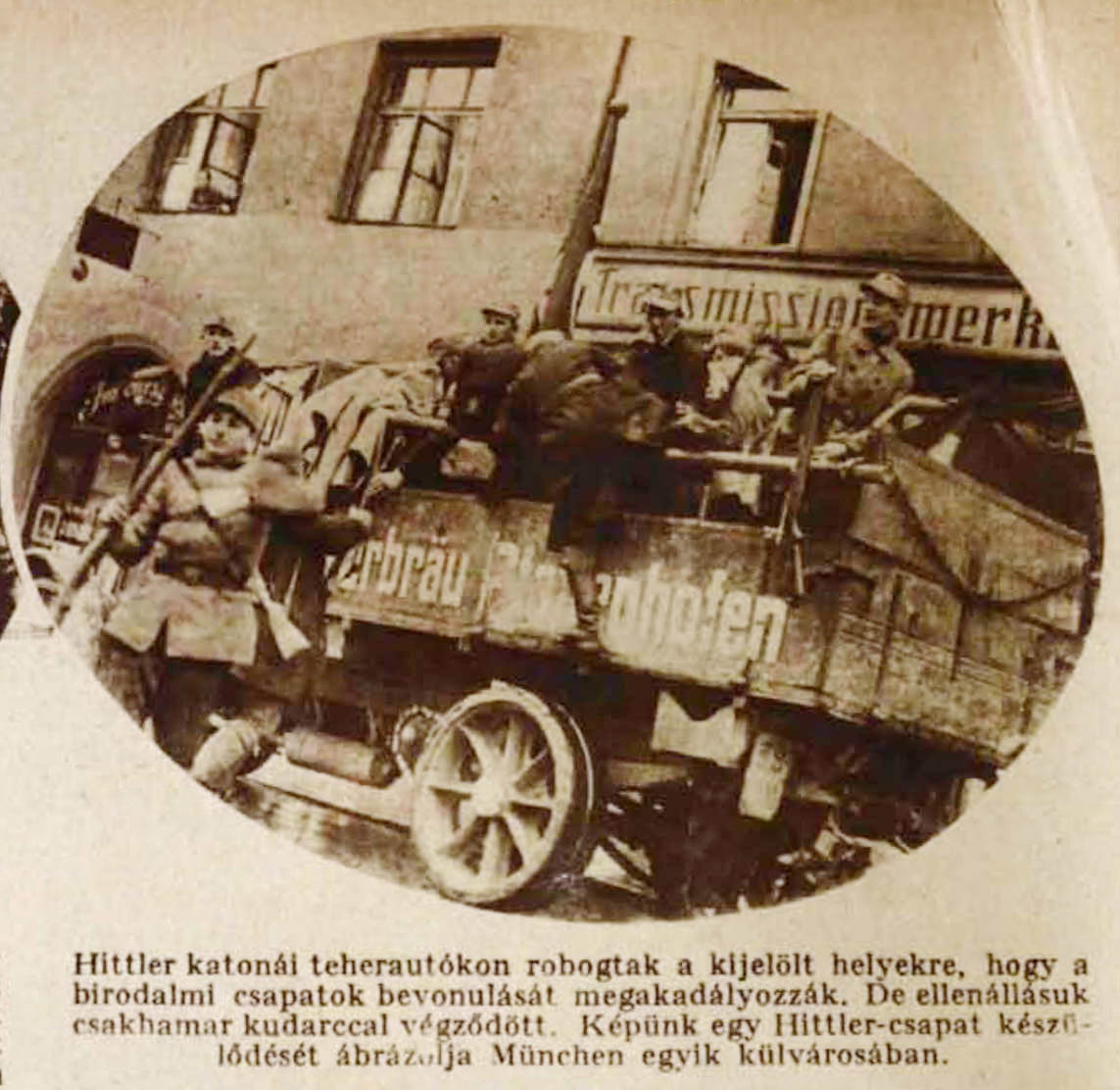
“Hittler’s soldiers drove trucks to the designated locations to prevent the imperial troops from marching in. However, their resistance soon ended in failure. Our photo shows the preparations of a Hittler troop in a suburb of Munich.”

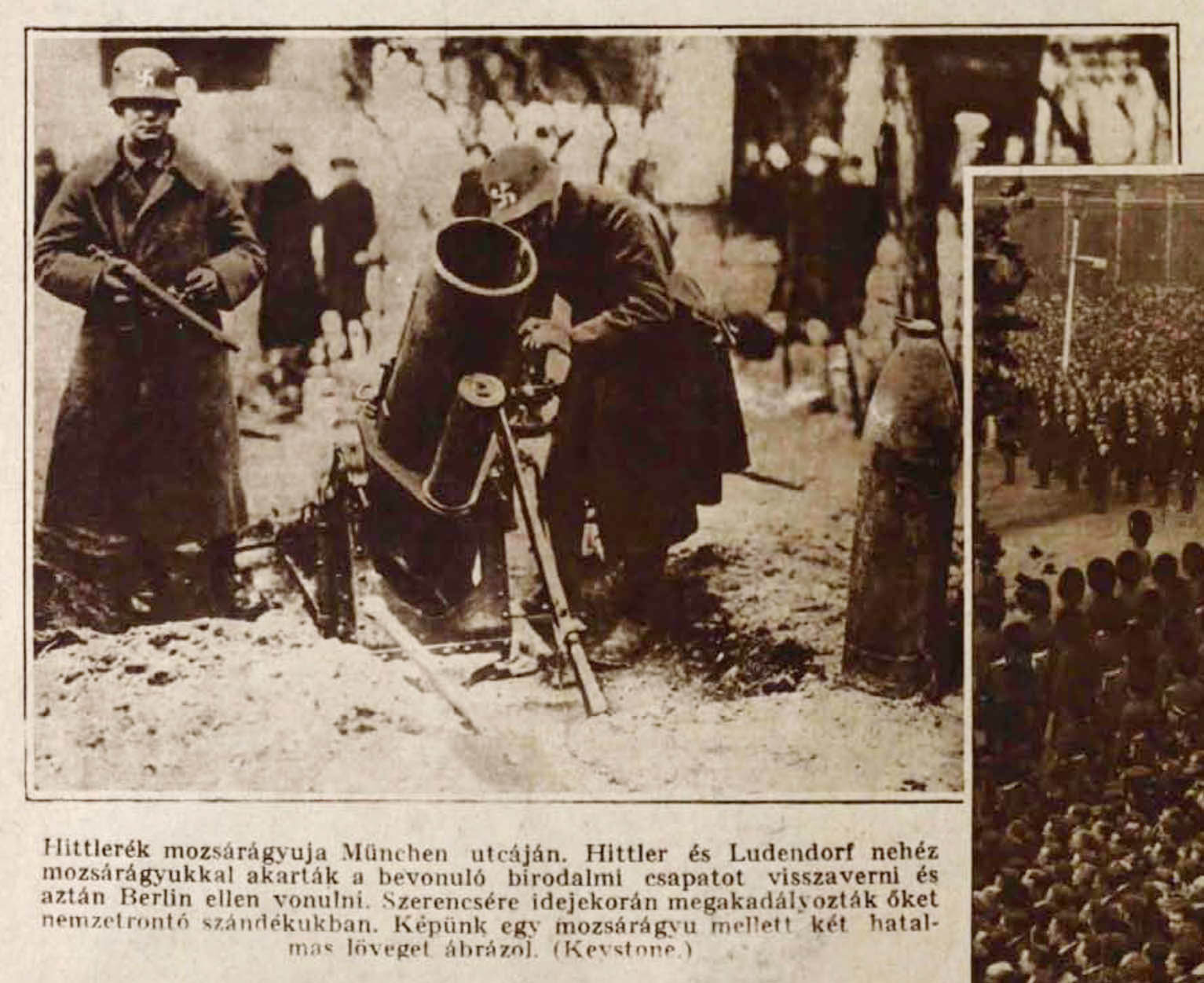
“One of Hittler’s mortars on the streets of Munich. Hittler and Ludendorf wanted to repel the attacking imperial troops with heavy mortars, and then march against Berlin. Fortunately, they have been prevented in due time in their nation-destroying intentions. Our photo shows a mortar with two heavy cannons (Kevstone) on two sides.”

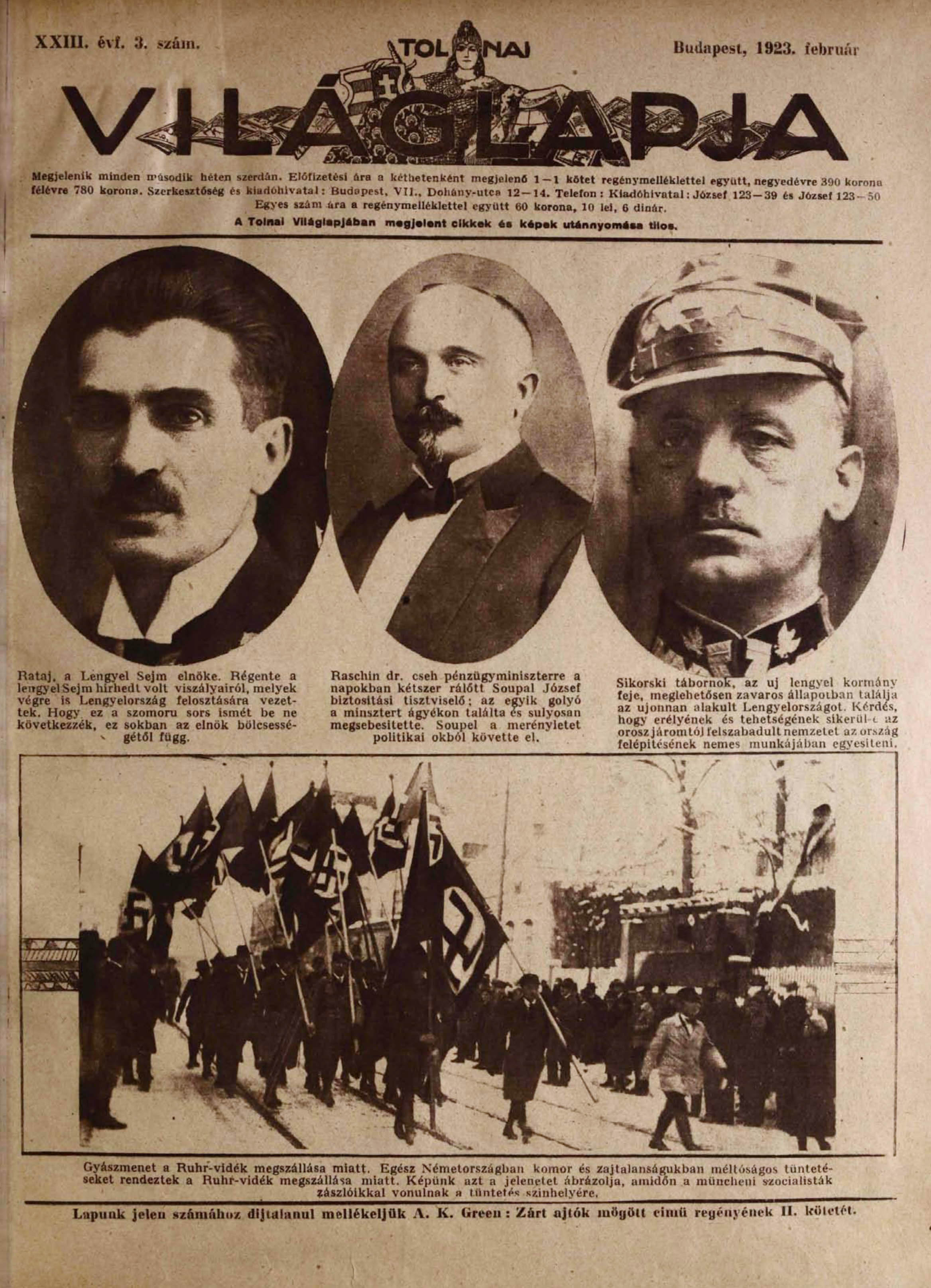
Fortunately, in spite of all these transitional, sinister and forgettable episodes, Germany was able to maintain its former dignity. There even the Socialists are not alien-hearted, but real irredentists, who march with the party flag in protest against the shameful Versailles treaty. They do not besmirch the name of the country, like this … what’s his name … Hittler.

“A funeral march for the Allied occupation of the Ruhr area. Throughout Germany, somber, silent and dignified protests have been staged due to the occupation of the Ruhr area. Our photo shows the scene where the Socialists of Munich march with their flags to the place of the protest.”

All quiet on the Isonzo front


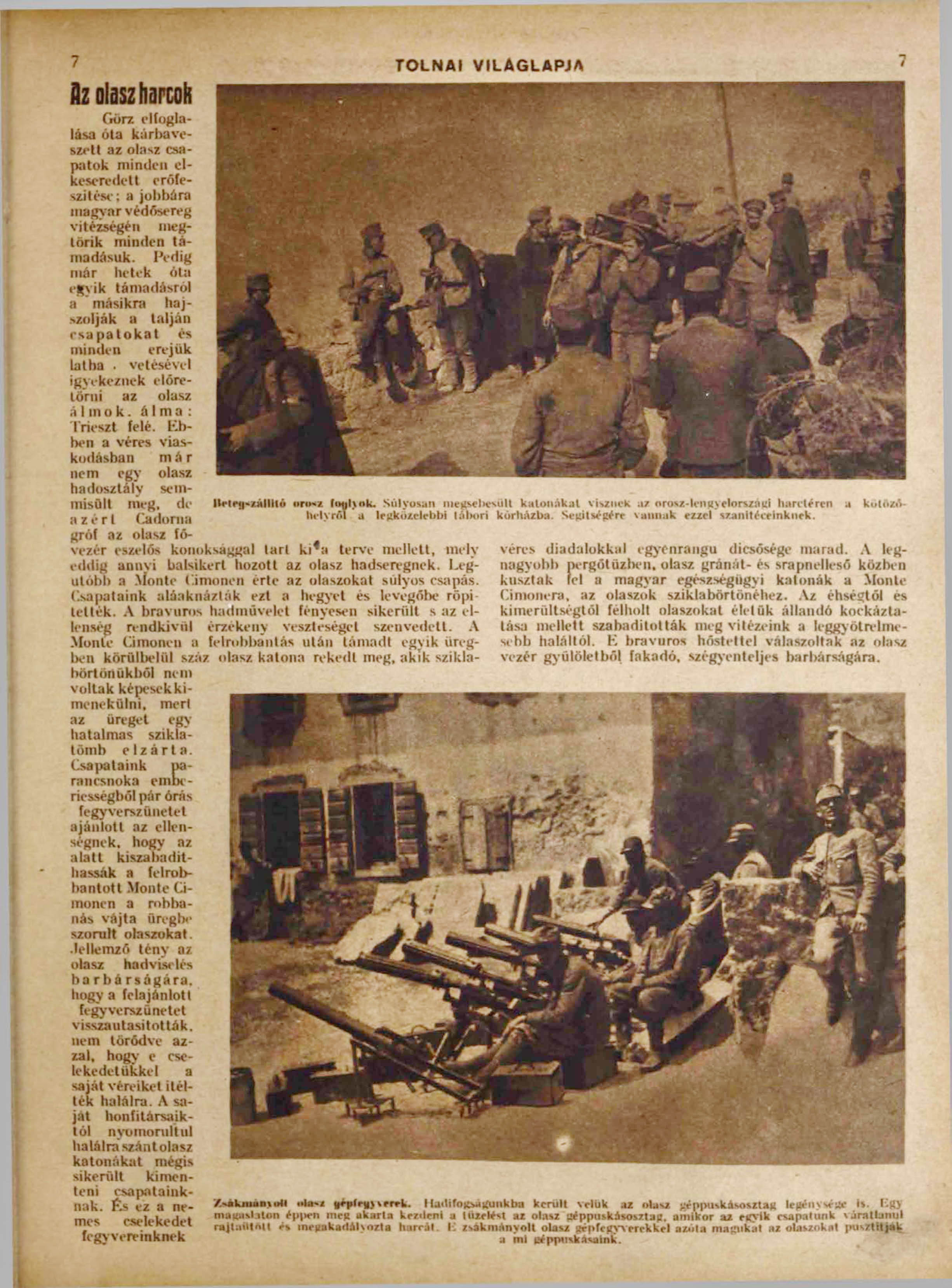
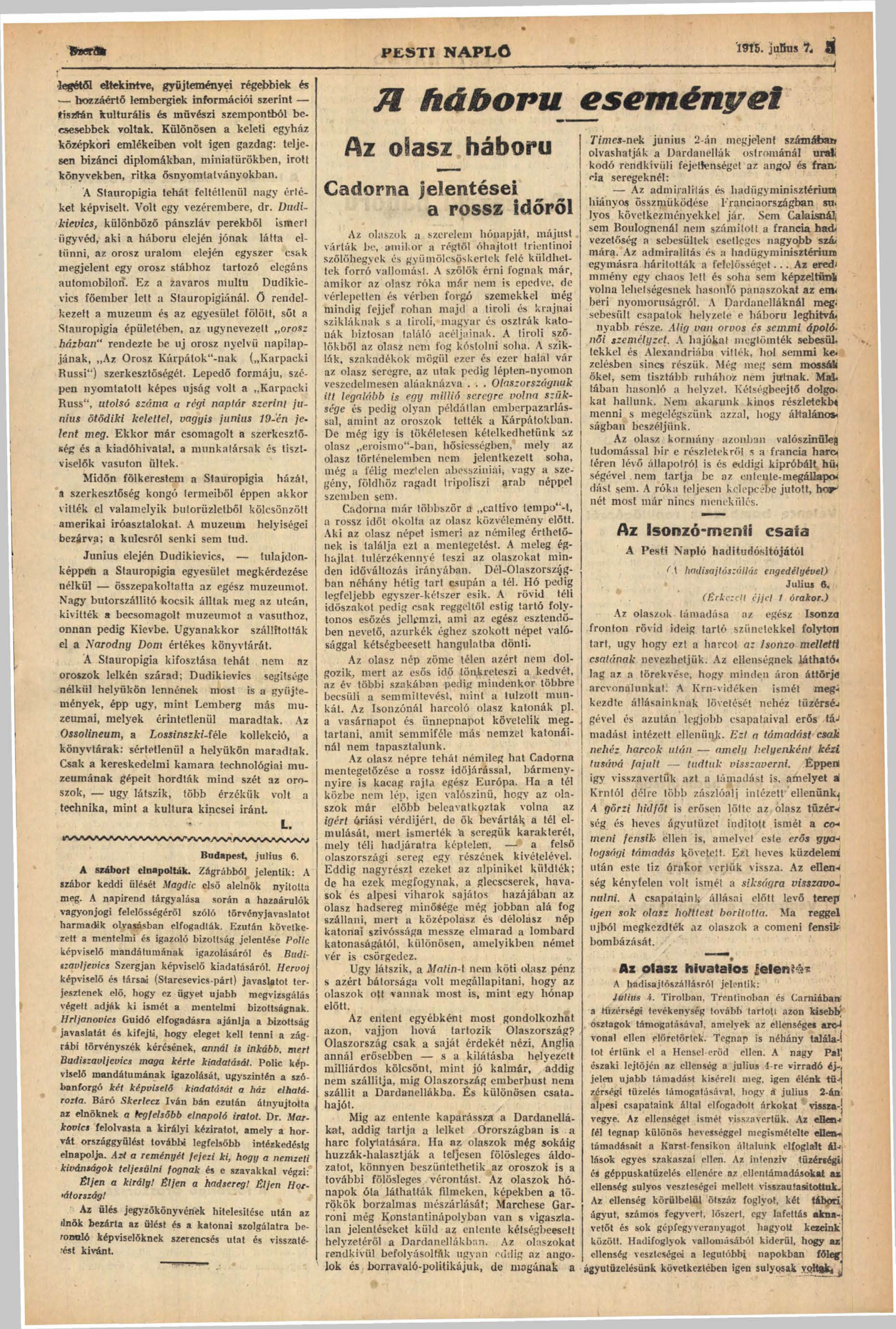
After the recent post on General Cadorna, Tamás Deák sent some clippings from the contemporary Hungarian press as a commentary. The reports were written a hundred years ago, at the turn of 1915-1916, from the Italian front. Nice, round, even hilarious stories about the valor and humanity of the Austro-Hungarian army, the failures of the Italian army, but mostly about the ruthlesness and the embellished war reports of General Cadorna. Arguments over national characterology and why the Italian is not a good soldier. In short, all the topoi desired both by the military leadership and general readers anxious for their sons and husbands fighting on the front, and which were obviously used by the Italian press as well. As to how much they reflect reality, it would require a more complex analysis. So let us read them as the war, seen from a grassroots perspective.


The war in Italy
After the occupation of Görz [Gorizia], all the desperate efforts of the Italian troops are squandered. Their attacks are broken at the prowess of the mostly Hungarian defenders. Even if they have been driven from one attack to another for weeks, and they try to break ahead towards the Italian dream of dreams: Trieste. More than one Italian division has already been destroyed in this bloody struggle, but Count Cadorna, the Italian commander-in-chief insists with an insane stubbornness upon his plan, which has already brought so much failure to the Italian army. Most recently, the Italians suffered a severe blow on Monte Cimone. Our troops had mined this mountain, flinging it high into the air. This brilliant operation was a resounding success, and the enemy suffered heavy losses. About a hundred Italian soldiers were stranded in one of the cavities created by the explosion in Monte Cimone, and were unable to escape from their rocky prison, since the cavity was blocked by a huge boulder. The commander of our troops offered the enemy a few hours truce out of simple humanity, so they could recover the Italians holed up in the cavity hollowed out by the explosion in Monte Cinone. It is characteristic of the barbarity of Italian warfare, that they rejected the truce offered, not bothering about the fact, that thereby they had sentenced their own blood to death. Nevertheless, our troops managed to rescue the Italian soldiers, who had been left to a miserable death by their own compatriots. And this noble act will remain a glory of our weapons equal to their bloody victories. In the heaviest drum fire, in the midst of Italian grenades and a rain of shrapnel, the Hungarian medical corpsmen crept up Monte Cimone, the rocky prison of the Italians. They saved the Italians, at 
risk to their own lives, who were half-dead from hunger and exhaustion, from a most agonizing death. With this brilliant feat they responed thusly to the shameful barbarity of the Italian commander, inspired by hate.


The Italian veteran speaks about his “heroic deeds”.
And then suddenly an enemy grenade comes, and tears off my left arm!
But Giuseppe – interjects a member of the company – you still have your left arm!Per Dio! – the Italian bouncer says indignantly. – If you are so petty, what do you say about the Cadorna reports?


The Italian war
Cadorna’s report on bad weather

The Italians were looking forward to May, the month of love, to send a hot declaration of affection to the long-desired vineyards and orchards of Trientino. However, the grapes will already be ripe when the Italian fox, 
languishing no more, instead covered with blood and with bloodshot eyes, will be still ramming his head against the rocks of Tirol and Carniola, against the keen-aimed bullets of the Tyrolean, Hungarian and Austrian soldiers. The Italian will never eat of the grapes of Tyrol. Beyond the rocks and abysses, a thousand deaths ares waiting for the Italian army, and the roads are dangerously undermined at every step… Italy would need at least one million men here, and with such an unprecedented waste of souls, like the Russians in the Carpathians. Even so, we have strong doubts about Italian “eroismo”, which has never figured in Italian history, not even against the half-naked Abyssinians or the poor, earthy Arabs of Tripoli.

Cadorna has repeatedly blamed the “cattivo tempo”, bad weather, for Italian public opinion. Those who know the Italian people will find this pallative somewhat understandable. The warm climate makes the Italians overly sensitive to any change of weather. In Southern Italy, winter lasts only a few weeks, and snow falls only once or twice a year. The short winter period is characterized by continuous rainfall from dawn to dusk, which encourages a truly desperate mood among this people, accustomed to smiling azure sky throughout the whole year.

The majority of Italians do not work in the winter, because the rainy weather ruins their mood, and the rest of the year they value idleness over excessive labor. The Italian soldiers fighting at Isonzo, for example, require rest on Sunday and feast days, a custom that is not observed by the soldiers of any other nation.

Therefore, the Italians are somewhat persuaded by Cadorna excuses of bad weather, although the rest of Europe just laughs at him. Had winter not intervened, the Italians would have probably entered the war much earlier for the giant payment in blood promised to them. However, they had awaited the passing of winter, knowing well the character of their own people, which is unable to wage a winter campaign – with the exception of some of the northern Italians. So far, they have sent ahead mostly these alpini, but once they are depleted, the quality of the Italian army will further sink below those in the home of the glaciers, snowy mountains and alpine storms, because the toughness of central and southern Italian people falls far short of the Lombard soldiers, especially of those that also have some German blood in their veins.

Apparently, the Matin is not bound by Italian money, so they had the courage to declare that the Italians are now exactly where they were a month before (…)


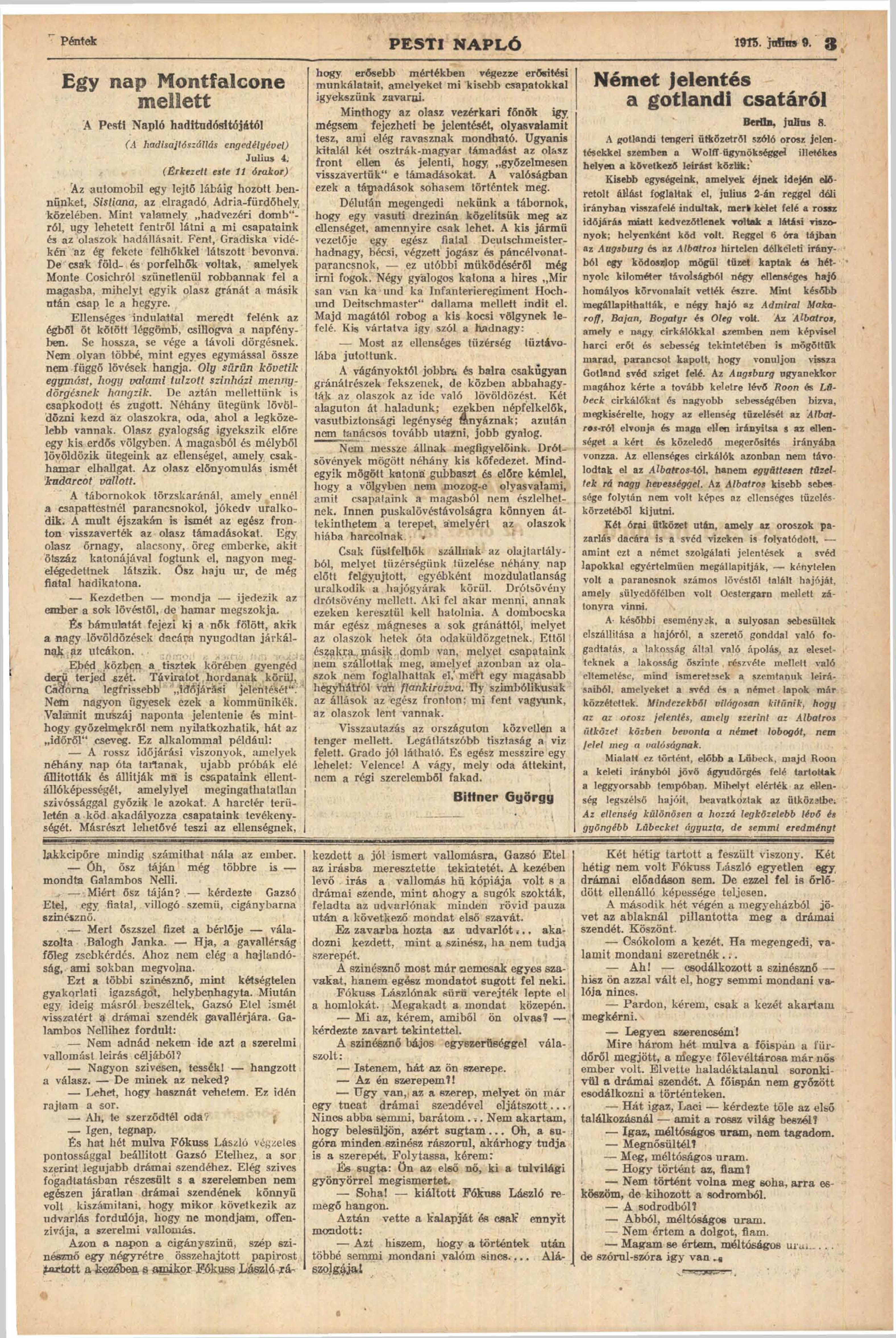
A day next to Montfalcone

(…) During lunch, a gentle serenity spreads among the officers. A telegram is brought around with the latest “weather report” of Cadorna. These communiqués are not very clever. He must report something daily, and as he cannot report on victories, so he prattles on about the weather. This time, for example:

– The bad weather, which has been going on for a few days, have repeatedly tried the endurance of our troops. Nevertheless, they resist it with unshakable tenacity. In the area of the battlefield, fog hinders the activities of our troops. On the other hand, it allows the enemy to advance with their works of fortification, which we are trying to disturb with smaller troops.

As the Italian commander in chief cannot end his report 
this way, he does something that can be called quite cunning. In fact, he invents Austro-Hungarian attacks against the Italian front, and he reports that “we have victoriously repelled” these attacks. In reality, these attacks never took place (…)


South Tyrolean front
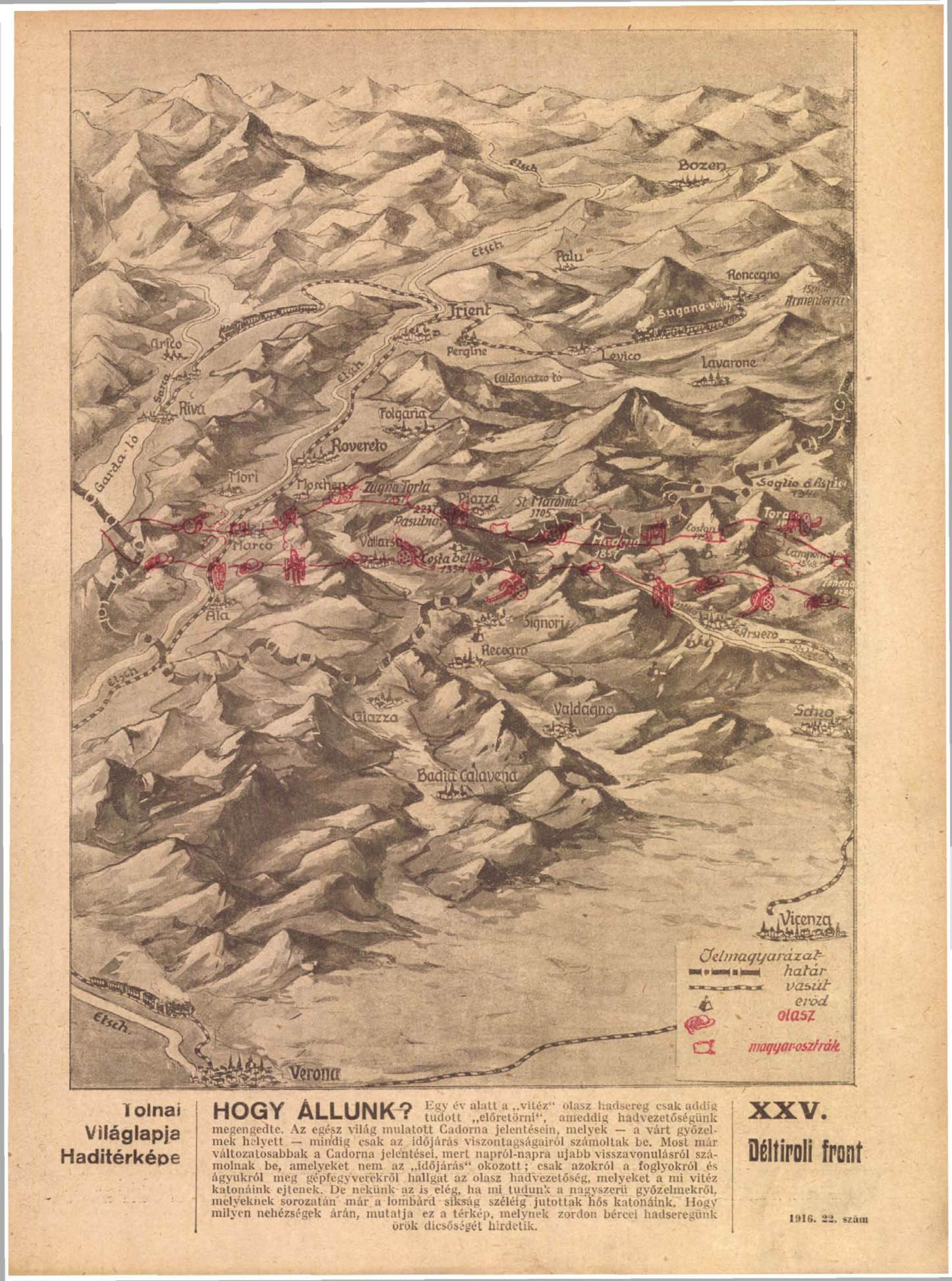
How are we doing? In one year, the “valiant” Italian army only could “break forward” where our military leadership would allow them. The whole world was amused by Cadorna’s reports, which went on an on about the bad weather rather than the awaited victories. However, Cadorna’s reports have recently become more varied, because they daily report on various retreats caused no longer by “bad weather”. The Italian military leadership keeps silent only about the prisoners of war and the cannons and machine guns seized by our valiant soldiers. However, for us it is quite enough if we know about the great victories, through which our heroic soldiers have already reached the edge of the Lombard plain. Such difficulties, as shown in this map, the grim ridges of which proclaim the eternal glory of our army.


The Isonzo front
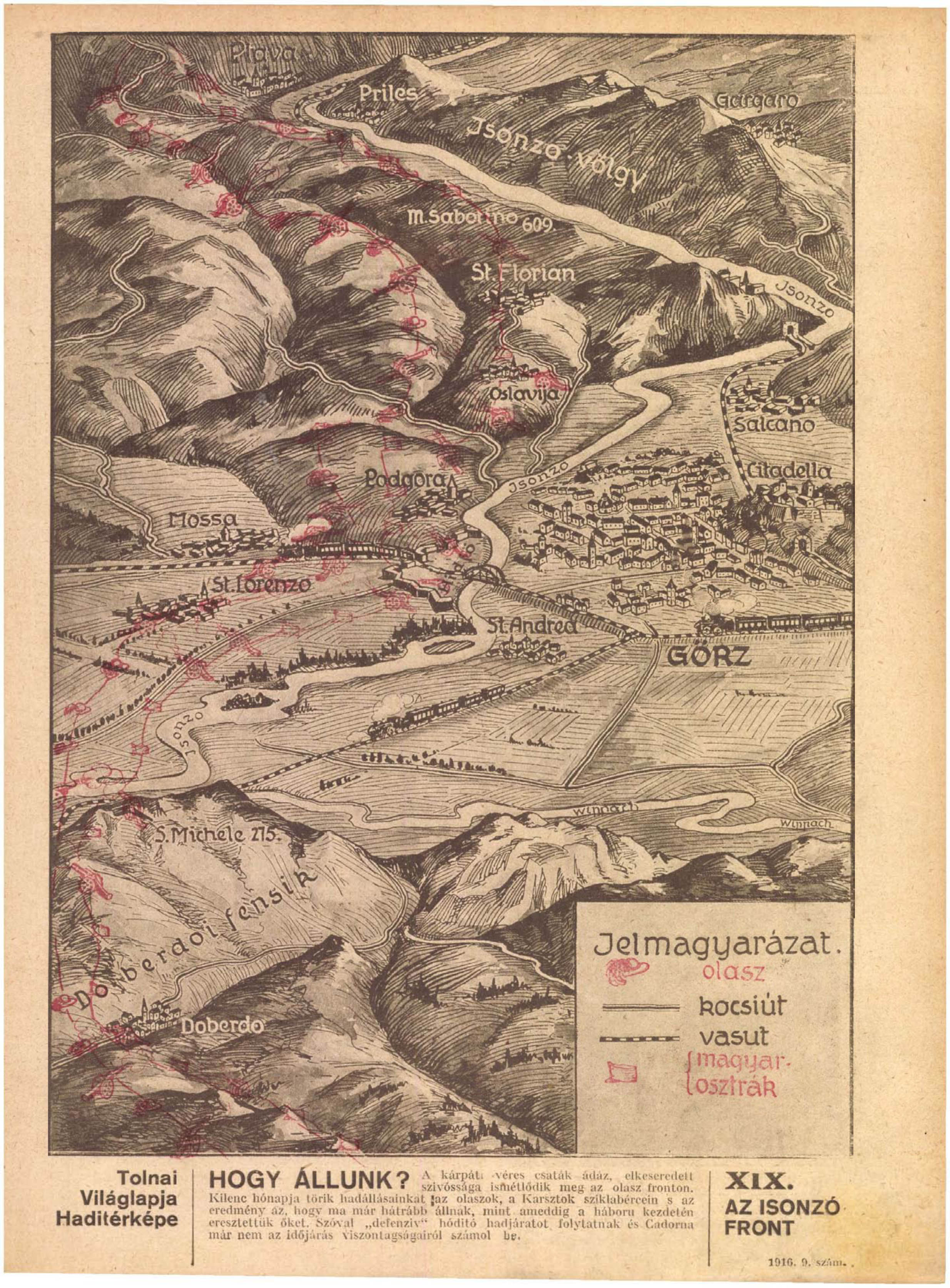
How are we doing? The fierce and desperate resilience of the Carpathian battles is being repeated on the Italian front. For nine months the Italians have been trying to break our positions on the rocky ridges of the Karsts, and the result is that they are further back than where we allowed them at the beginning of the war. That is, they are proceeding a “defensive” campaign, and Cadorna does not report on bad weather any more.


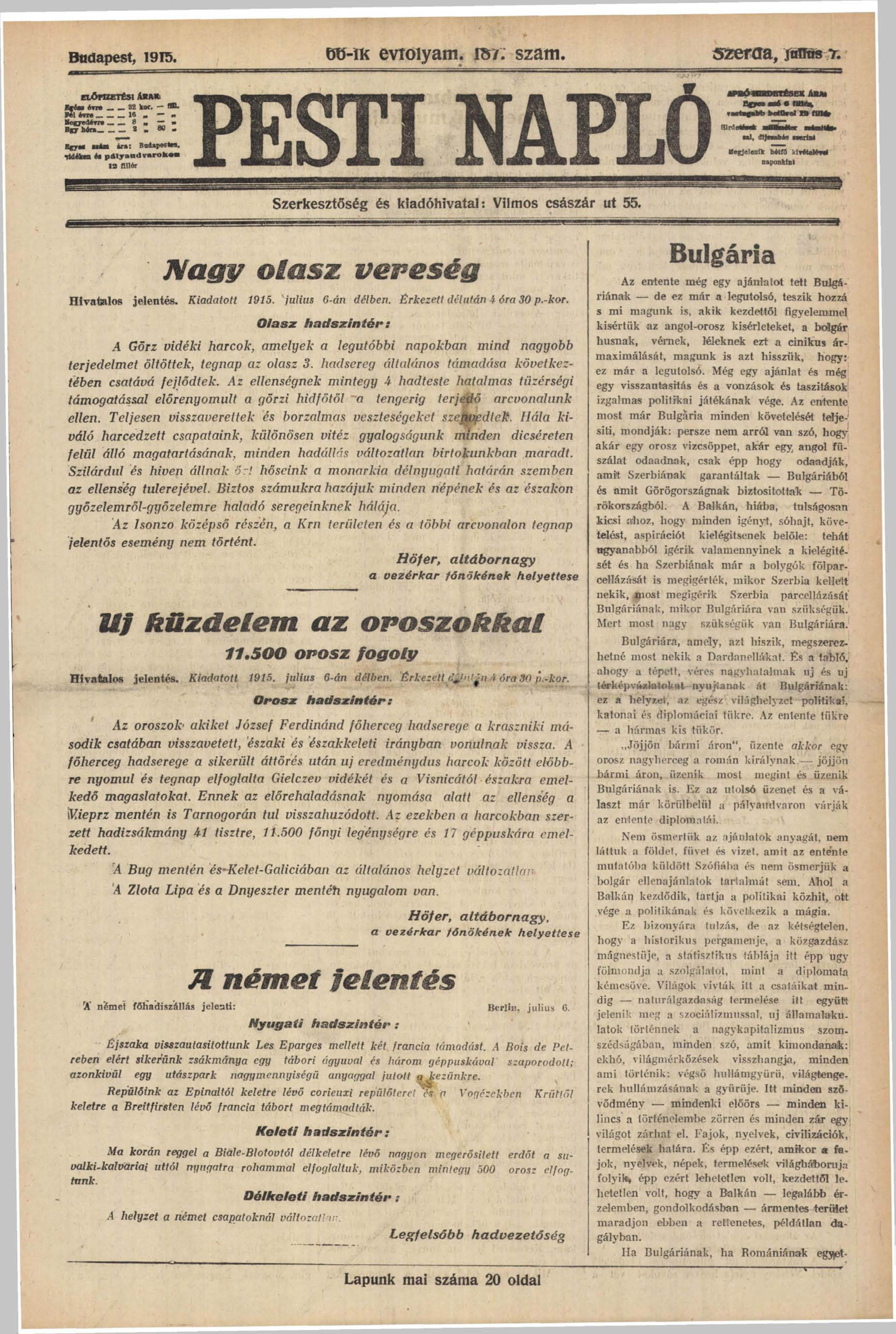
And finally, as a counterpart of the Cadorna reports, let us have here a typical Austro-Hungarian Höfer report. This report, radiating strength and positivity,  fills the reader with confidence and hope. Which we also wish to all our readers for the new year.


Great Italian defeat
The battles around Görz [Gorizia], which took on an ever broader scope recently, have developed into a battle, as a result of the offensive of the 3rd Italian army. About four enemy corps\ advanced with massive artillery support against our front line, contracted from the sea to the Görz bridgehead. They were completely beaten back, and suffered terrible losses. Thanks to the bravery beyond all praise of our excellent, battle-hardened troops, especially of our valiant infantry, all military positions have remained in our possession. Our heroes faithfully and firmly guard the southwestern boundary of the Monarchy against the advances of the enemy. They can safely count on the gratitude of all the peoples of their homeland, as well as of our armies advancing from victory to victory in the north.

All quiet in the central part of Isonzo, in the Krn territory, and the other front lines. No major event has happened.


Höfer, Lieutenant-General
Deputy Chief of the General Staff

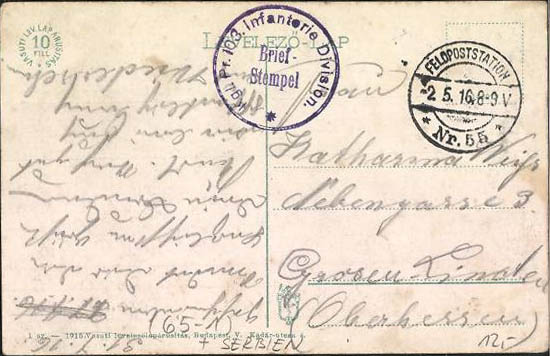
Szabadka Unlimited, 3. So ugly that already disgusting


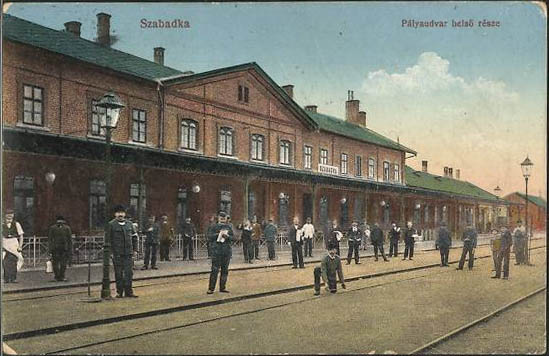
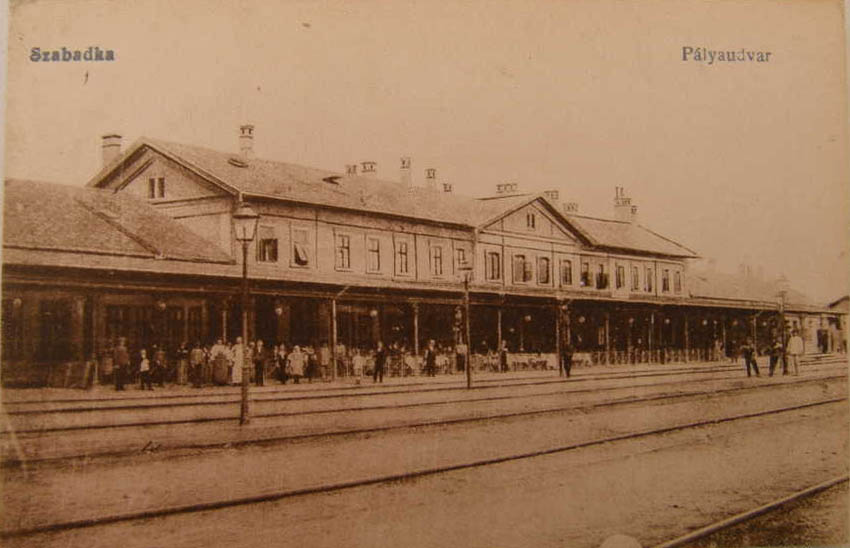
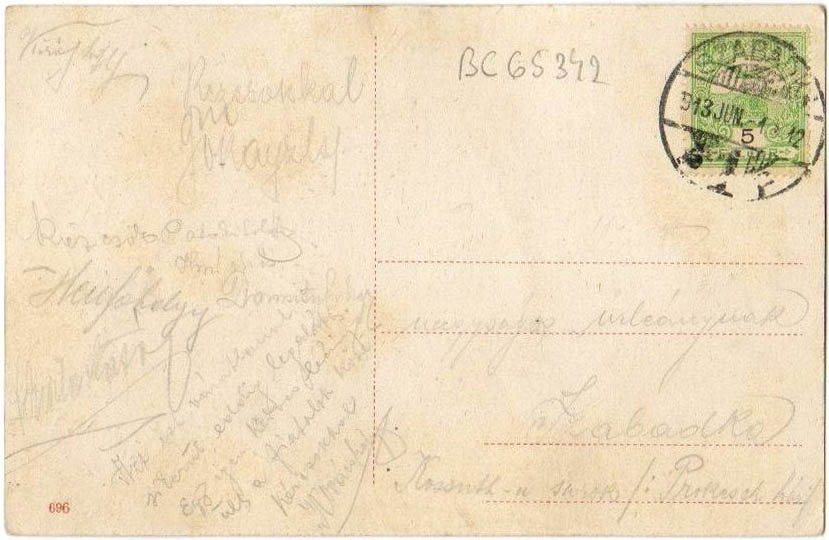
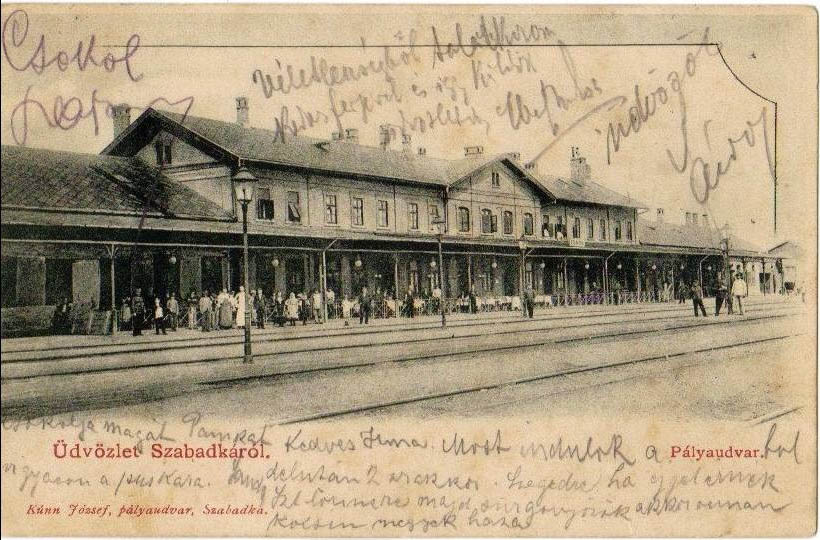
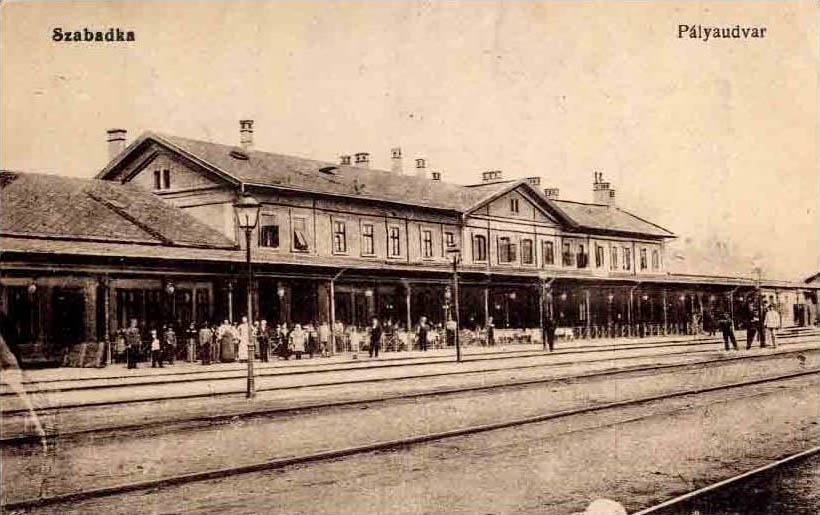
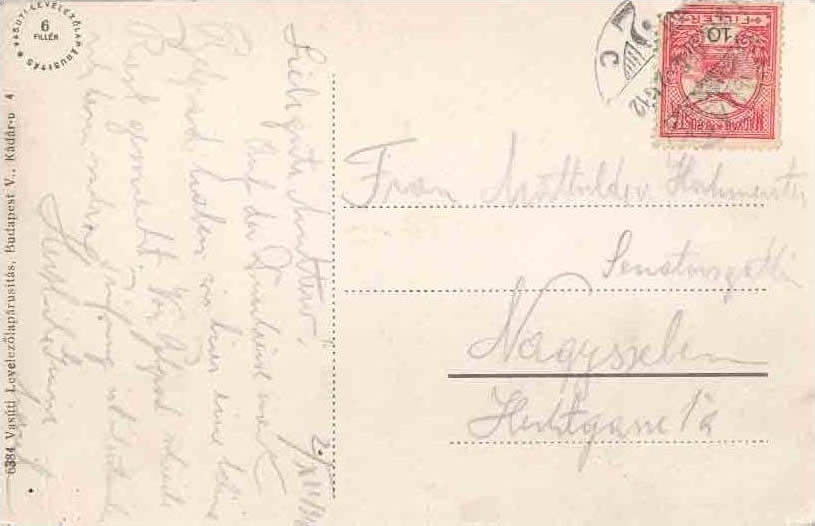
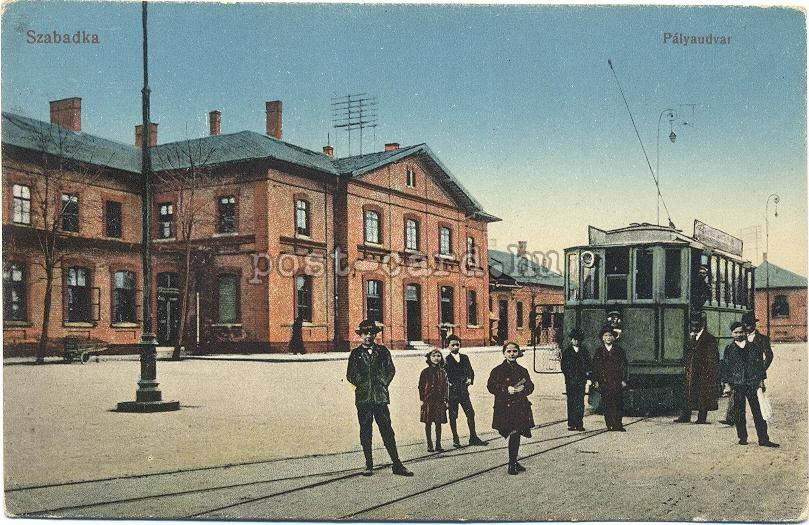
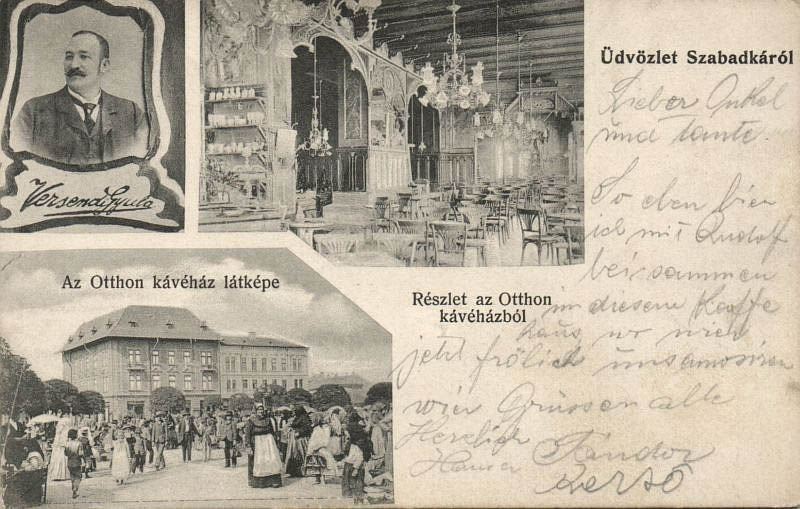
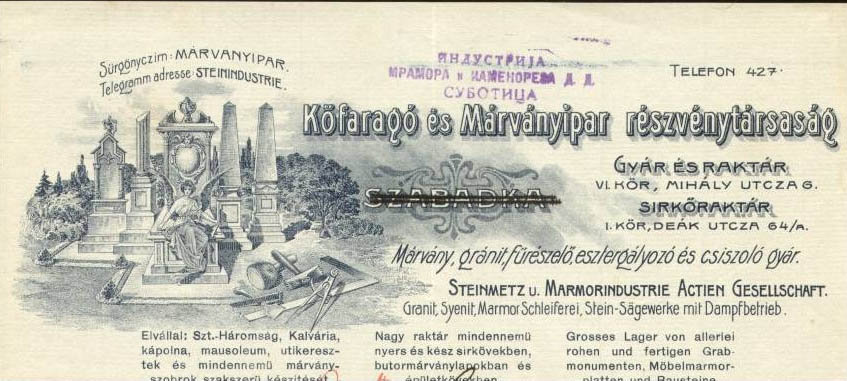
“The railway station in Szabadka is the building which all the foreign rulers unanimously declare to be ugly.” This sentence contains the essence of the journalism of Szabadka/Subotica. The railway station in Szabadka is ugly, how could it be otherwise, since Szabadka is a province, from which we desire to break free to the large world, and which until then we belittle from the altitude of the coffee house. But Szabadka is also the center of the world, whose railway station is known to all the foreign rulers, they exchange opinions on it wherever they meet, and their opinion is unanimous and steady. Szabadka and its railway station are a fixed point in the uncertain universe, which therefore we can never leave. Only foreign rulers use it for transit; for the king of the coffee house it only plays the role of the daily stumbling block.


Bácsmegyei Napló, 22 October 1911

The Bulgarian king is traveling
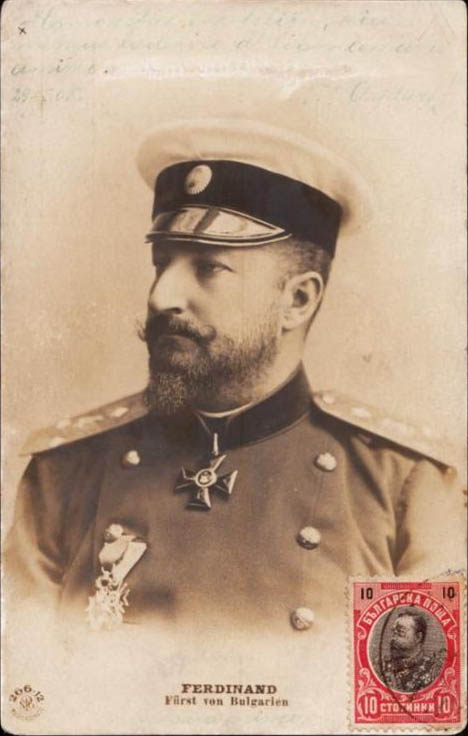
Ferdinand, the democrat

From our correspondent. Szabadka, 21 October

A king, even if only the ruler of a small Balkan state, is a great lord, so it might be of some interest how he travels, and how he behaves when he travels not on his private court train, but on the regular one, together with peddlers, free-pass journalists, civilian women and Serbian merchants.

The correspondent of the Bácsmegyei Napló traveled together with Ferdinand, King of Bulgaria on Thursday evening, from Szabadka to Belgrade, and recounts his impressions in this report.

It has been reported in the newspapers that on Thursday evening Ferdinand, King of Bulgaria and his wife traveled through the railway station of Szabadka.

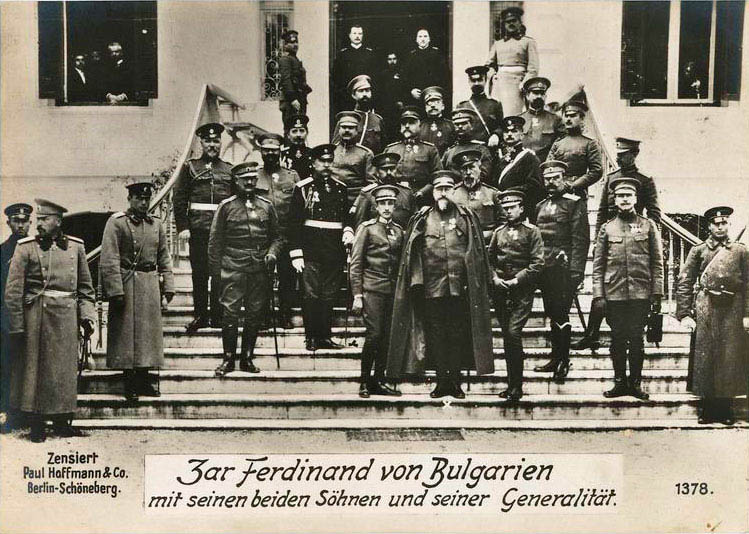
The report was partially wrong. The Queen of Bulgaria was not on the fast train. She had previously gone to Sofia on the express train. The king traveled with his two sons and his suite. They had been visiting to Alcsút for a few days, and now they were on their way back to the Balkans.

Ferdinand, the king is a gentleman in his 40s. He has a long goatee and a really bold-sized nose.


He and his suite of six people traveled in two Bulgarian special compartments. The two compartments were attached directly in front of the dining car, so from the latter one could quite well see what was happening in one of the two special compartments.

I thought that the Bulgarian king could be interviewed on the way. After all, the Hungarian public is so badly informed about Tripolis, Turkey, and the Balkans in ferment, that any authentic information from the Bulgarian king could be useful.

This plan, however, had to be given up. The Hungarian railway employees traveling with the king, just like the members of his suite declared that I can even make no attempt to speak with the king. He does not accept any journalists. He is a military man who does not like to talk much.

– It is impossible. Impossible! What do you think? – said a long-bearded Bulgarian in a frightened face, who could speak German, and you could clearly see the holy horror on his face that a journalist wants to speak with his ruler.

I really did not want to challenge the impossible, although all the possible reporter’s tricks run across my mind in a moment. I thought to dress as a conductor or to change clothes with the waiter, but such things can be done only in the anecdotes. Nevertheless, I did not want to leave unexploited the advantageous situation that I was traveling together with the Bulgarian king and that I could observe what he was doing.

So here I give a description of the king’s travel from Szabadka to Belgrade.

In Szabadka the king looked out of the window of his special compartment. He looked at the railway station, and then with a poorly disguised oh my, how ugly on his face he turned away from the old, decrepit and disgusting station of Szabadka.

After the train pulled out of the station of Szabadka, it did not even get to Nagyfény, when the king and his suite came to the dining car. A small part of the dining car was closed off, and it was occupied by King Ferdinand and his suite.

In the company of the king there was also Offner, the shop manager from the right bank of the Danube, to whom the king seems to have a very good relationship. The king and the manager sat opposite each other at the small two-person table of the dining car, and they chatted extremely happily over dinner. It seems that Offner told some piquant anecdotes to the king, because before the latter laughed, he glanced sideway at his sons, whether they understand what it is about.


The chef of the dining car prepared a special dinner for the king and his suite. The dinner must have been very good, because the king took much from every dish. They drank red wine to the dinner. The king does not show any sign to his having been a Hungarian hussar, because he never clinks with his glass. The dinner lasted as far as Ópázua. Then the king stood up and went back to his special compartment. First, however, he opened the door of the dining car, and accompanied Offner to the other part of the train. There he took leave of him. He shook hands in a patriarchal way, and told him:

– Good bye, dear Uncle Offner. Please, at Zimony come over to me for a small chat.

The waiters say that King Ferdinand always calls the manager Uncle Offner.

By the way, the waiters and the train staff are not at all satisfied with King Ferdinand. He does not give a tip. He did not give anything for the dinner service either. It was only the chief marshal who honored the head waiter with twenty francs.

They give loud expression to their dissatisfaction. They tell that when the king recently traveled to Budapest in a special compartment on the morning express train, he only gave a tip of twenty francs. He handed it to the chief of the Eastern Railway Station to distribute it among the train staff. The restaurateur of the Eastern Railway Station gave 19 crowns for the 20 francs. From this, the brakeman got 4 crowns, and the two conductors and the train driver 5-5 crowns.

– I have a passenger, a merchant from Verbász – says one of the conductors –, he is a far greater gentleman than the Bulgarian king.

Nevertheless, the conductors and the waiters speak with great reverence about the king. They sit together and whisper about him.

Between Ópázua and Zimony the king asked a bottle of wine and a bottle of mineral water into his compartment. It was taken by the waiter. He says that the king is reading some files, and a map is spread out in front of him. His Majesty is obviously very interested in the affairs of Tripolis, and he is being continuously reported about them.

In Zimony [the pre-1920 Hungarian-Serbian border station] the passengers leave the train. The king, however, remains in the car. Manager Offner also goes to him. The Serbian customs officer, who, by way of a very insufficient control, only asks the passengers about their profession, does not enter the special compartment. He knows that its passenger is no anarchist, but a king.

In Belgrade the Bulgarian compartments are attached to a special train. It will take Ferdinand to Sofia. The king once more appears in the window, and shakes hands with manager Offner:

– Good night, Uncle Offner. Good night!


Bácsmegyei Napló, 22 November 1911

Kings’ encounter in Szabadka
Our correspondent. Szabadka, 21 November

The railway station of Szabadka had two distinguished guests today. At nine-thirty in the morning, with the regular express train arrived Ferdinand, King of Bulgaria, the old acquaintance of Szabadka. The royal guest came from Sofia and goes to Poprádfelka. He only came through the ugly station of Szabadka because this is the shortest way there.

Two hours later, at 12:44 a Serbian special train slid into the station. It was taking home another Balkan notable, His Majesty Petar, from France, where they eat the meat with fork and knife, and also use towel for washing. He was accompanied by Minister of Foreign Affairs Milovanovich, and eleven Serbian dignitaries. They spent ten minutes at the railway station, during which time they lowered the curtains of the club car.

The two Majesties’ trains met at Csengőd. Ferdinand leaned out of the car, and told to Petar:

– Still so ugly.

That is, the railway station of Szabadka.


Bácsmegyei Napló, 12 February 1912

The king on the railway station of Szabadka

Last night, a distinguished guest stayed for some minutes on the railway station of Szabadka. The king… True, only some recently coined king: the ruler of the Bulgarians. His arrival did not stir much sensation, as the Bulgarian king appears so often on the railway station of Szabadka as his colleague, the club king in the card-play called “twenty-one”. King Ferdinand came this time from Archduke Joseph, and was on his way back to Sofia. The train was about to leave, when Chief Adjutant Imre Pocketovich said to the ruler:

– Your Majesty, you graciously condescended to forget something.

– What did I condescend? – asked the king, and he apparently seemed to be shocked.

– We are in Szabadka – chanced the Adjutant, who is otherwise a Balkan champion of chance games.

– Oh yes – he said, and spat. – Phew, how ugly this station is. So ugly that already disgusting. – Said the king, and the train pulled out.


Bácsmegyei Napló, 18 November 1911

The decrepit railway station of Szabadka is still being patched

(Our correspondent) The railway station of Szabadka is the building which all the foreign rulers unanimously declare to be ugly. King Petar of Serbia, who just arrived to Paris, got sick because he looked out at the railway station of Szabadka.


And how sick would have become poor Petar Karadjordjevich, if he had to get out here, totter along in darkness and mud among the trains, jumping in front of the locomotives with menacing eyes ready to leave, if in the rain there had been no room for him either on the covered platform, or in the waiting room.

The rulers in transit, who make their obligate comments, are spared from all this, but we, poor inhabitants of Szabadka, have to suffer all the nuisances of this very small, very ugly and very dangerous railway station.

The people of Szabadka is confident each spring, summer, autumn and winter that the new railway station would be finally built.

However, on the railway station of Szabadka, in the current one, the decrepit one, the one ripe for the pickaxe – now they started new works. They are building a huge and thoroughly flammable depot for the repairs of the locomotives.

On the railway station of Szabadka today there is no space even to let the trains in, and nevertheless the Hungarian Railways are still patching this old building, until one day it all will crumble.


Szabadka Unlimited, 2


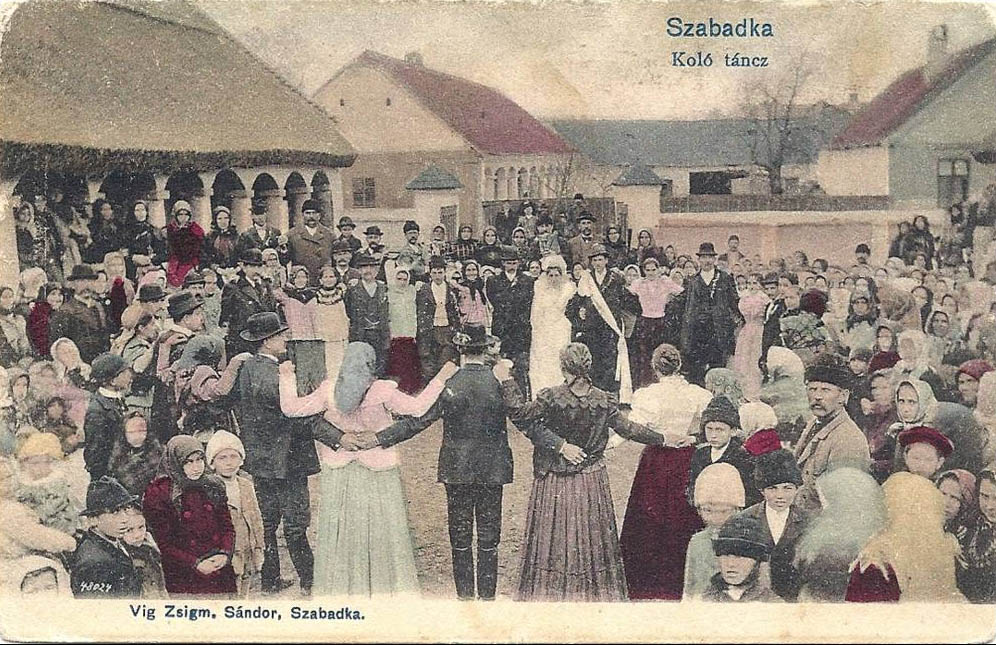
Kangaroos and black police officers, Native American seminarists and Chinese idol figurine sellers, Russian revolutionaries and Odessa Jews in Szabadka/Subotica a hundred years ago. And how many more peoples were not yet mentioned in the previous post! Thus now, a week before our excursion, we make Szabadka even more unlimited, picking some exotic reports from the hundred years old – 1911-12 – volume of the most popular local newspaper Bácsmegyei Napló. Nevertheless, the first one will be a cuckoo’s egg, from a country whose inhabitants did not come to visit Szabadka in the period, only kept sending letters with more or less regularity. Nevertheless, it is worth to publish the contemporary article on this correspondence, first because we can recognize in it an early example of the Spanish lottery or Nigerian letters, and second because the sender probably did not know that he is almost writing to his fellow countrymen: from old Barcelona to New Barcelona.


Bácsmegyei Napló, 30 December 1911

The Spaniard has written again
Our correspondent. Szabadka, 29 December

The Spaniard, the well-known dear Spaniard was late in this year. In the previous years he already wrote in early summer his letter, in which
he complains that he was put in prison and has no access to his wealth of some 800 thousand francs.

Nowadays nobody believes any more to the Spaniards, who seem to write their well-known letters only so that the Hungarian newspapers would have some fresh topic. But so far they at least wrote in the summer, when there was a shortage of subjects. Now, however, they decided – absolutely unfairly – to write their letter in the wintertime.

Today it was restaurant owner Rehák to get a letter from Barcelona. The author of the letter was Civilo Lurang Vapor Trixtan, who outlined his tragedy according to the usual template, and invited Rehák to Barcelona.

The restaurant owner, however, did not go to Barcelona. He went to the police, where he gave over the Spanish letter. And the police officers filed the letter with the other similar ones. They will probably propose to elect Civilo Lurang as a corresponding member of the Academy, as he corresponds so diligently.


Bácsmegyei Napló, 27 October 1911

Two German students want to become cowboys in Szabadka
Letter to the mayor

The letter which arrived today to the mayor’s office from Essen in Germany is not only interesting, but also very characteristic.

It was written by a young man named Kitzki. He writes that he is now a high school student, but he got tired of the school’s four grim walls, and longs for a free life. He also has a friend, and both of them want to be cowboys. Kitzki, the author reports that both are strong and healthy boys, as well as excellent walkers. They have already made a long tour, where they slept in the open air every nigh for four weeks.

The letter ends by pleading to the mayor to employ them as cowboys in Szabadka, and then he will see two happy people by his side.

The letter was addressed to:

An das Bürgermeisteramt alt Stellenvermittlungs burendt, Szabadka.

Two adventurous German students are now waiting for a response to this letter. Two young lads, in whom youth and vitality are raging, who feel their own power, and whose life is made miserable by having to live their days among the houses of a petty, grim German town. They have read some old poems or popular German novels, from which they made themselves an idea of Hungary. They imagine Szabadka as a place where the famous cowboys reside, and the mayor, the chief cowboy sits on horseback every morning, performs feats of daring in the endless puszta, and eventually goes to some outlaw tours… This is that mysterious and unknown world where the two red-faced, blue-eyed German students long to go.

The mayor’s office filed the strange application of the German students in the archive. Kitzki and his friend are preparing in vain for a cowboy’s career, in vain they order a white shirt with wide sleeves, in vain they drink wine instead of beer, in vain they roam in the night – they will not even get an answer.

Maybe it is better this way. They will wait for a few weeks, and then they will acquiesce in the knowledge that the cowboys of Szabadka cannot even write. The mayor wears wide white pants and a Hungarian tomahawk, but he only communicates from the horseback. Thus the two German students will come without an invitation, save they change their mind, and stay home to learn algebra in the Hochschule.


Bácsmegyei Napló, 24 November 1911

Nikola Tsankov made peace with his woman in Szabadka. But then he was arrested

(From our correspondent) The Bácsmegyei Napló reported on Saturday night that a woman from Újvidék [Novi Sad] reported to the police his lover, the Bulgarian-born wrestler Nikola Tsankov, who allegedly killed a stagecoach-driver in Bulgaria and robbed 100 thousand crowns from him, and furthermore killed a Bulgarian gardener in Rákospalota. We also reported later that the police investigation has determined that all this was just a tall tale of a woman in love. She invented the whole accusation out of jealousy, as she learned that while she was laying in the hospital of Szeged, his lover took up with a brothel owner at home in Újvidék.
Thus the investigation was terminated.

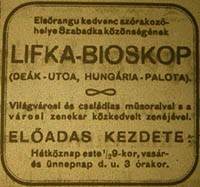
Nikola Tsankov – as he wanted to get rid of the woman in love – then left Újvidék, and came to live in Szabadka. Here he got employed at the Lifka Bioscope.

The woman in love from Újvidék, however, got to know where the companion of her joys and sorrows, the brave wrestler was hiding. The day before yesterday at 6 o’clock he arrived in Szabadka, and went to see the accused kraftmensch. A violent scene developed between the athlete and his lover. The love of the woman finally won the anger of the wrestler, and after the quarrel they sealed with a kiss their peace. Yesterday early morning Nikola Tsankov and his woman traveled back to the happy nest of their love, Újvidék.

However, they could not long enjoy the pleasures of reconciliation. By the time they arrived at Újvidék, the telegram of the Sofia police also arrived there. From Sofia they reported that Nikola Tsankov is no murderer, but a nice burglar anyway, who has already been convicted of prison, from where he escaped.

Thus the border police has arrested the strong Bulgarian.

Thus the woman in love has lost the companion of her life again.


Bácsmegyei Napló, 2 November 1912

Turkish warriors in Szabadka
Refugees from the war

(From our correspondntó) Friday night, around one o’clock, soldiers in exotic uniforms invaded the railway station in Szabadka. In the second class restaurant twelve Ottoman officers were sitting in the company of some Austro-Hungarian lieutenants and captains, while the third-class waiting hall almost swarmed with the many Turkish private soldiers.

The news quickly spread throughout the city that Turkish troops are at the station, and thus many people rushed out there even at this late night hour. Serbian and Bulgarian soldiers daily travel home this way, and the Red Cross detachments also go to the front via Szabadka, but Turkish soldiers are not a common sight here even in peace times. When it also turned out that the happily smoking Turks were still fighting in the morning, the curiosity was even more raised. They made all efforts to fulfill the curiosity of the citizens of Szabadka.

On the gray uniforms of the Turkish officers one could hardly distinguish the ranks and arms. One had some golden stripe on the shoulder, another on the arm. But their high fur-cap, with various colored fabric bands on the top, was the fancier.
All of them were unshaven, and looked with a wrinkled face at the curious bystanders. The soldiers in gray cloaks and with fez in the head were rapidly consuming the alcohol banned by the Quran. The more religious ones drank coffee.

The soldiers are very worn, tired people, but their voices ring with fanaticism. The officers seem to be intelligent, well-read men. Most of the common soldiers also speak in Serbian and Greek. The officers have a perfect command of Slavic and French. Some of them even understand German and English. Most of them studied abroad: two of them in the Kriegsschule in Berlin, others at the Paris Military Academy.

They politely replied to all the answers, and with a collegial affection offered to the foreign officers their only treasure, the delicious Turkish cigarettes.

The first Turkish troop arrived shortly after midnight from Bosna-Brod, followed by three other groups in the early morning. Their situation is sad, almost devastating. 1,160 soldiers and 77 officers became voluntarily prisoners of the Austro-Hungarian Monarchy. One of the officers recounted the following:

“On Monday evening we arrived at the Bosnian border of the Novibazar sanjak, to perform guard-duty at about eighty kilometers from the border. By an incomprehensible strategical mistake, the main army of Montenegro was able to cut us from the main body of our division. They attacked us. They immediately cut the heads of the surviving outposts and set them on their bayonets. The night was still dark, and they did not know that they had cut off a whole army corps from the division. But in the morning they already noticed it, just like we noticed that on the other side three corps of the Serbian army were nearing. Terrible hours followed. We were 2,400 opposed to 120,000 people. The only way of escape from being massacred to the last man was to reach the territory of the Austro-Hungarian Monarchy, the Bosnian border. In the early morning twilight we crawled through the bushes, and then we run with a superhuman impulse down to the valley of Plevje. We arrived at Plevje half dead, after nine in the morning. Most of us made the eighty-kilometer road on foot, by running without rest for about eight hours. Many of us collapsed on the road, mainly the old soldiers. The 16-18 year young boys were also carrying their fathers. In Plevje we immediately reported at the military headquarters. Our weapons were seized, and since Tuesday noon we are captives of the Austro-Hungarian Monarchy. We trust in the victory of the Turkish weapons, but the luck will stay by our side only if the Asian forces will also arrive at the front.”

One of the escorts of the Turkish soldiers escaping the certain death, Lieutenant Artur Winckenberg informed us about their future fate:

“The Secretary of War sent by telegram to Plevje the emergency passports, in which they indicate the garrisons where the POWs must stay until the end of the war. These 1237 Turks will be distributed in six garrisons. The cities of Miskolc, Kaposvár, Ungvár, Lőcse, Reichenberg and Zsalm receive now new Turkish inhabitants. Of course, they can freely go wherever they want, the soldiers will live in the garrison, and the officers, having given their word of honor not to escape, in private places. During their stay in Hungary the officers will receive their normal salary, and the crew their pay. This will be advanced to Turkey
by the Austro-Hungarian army”

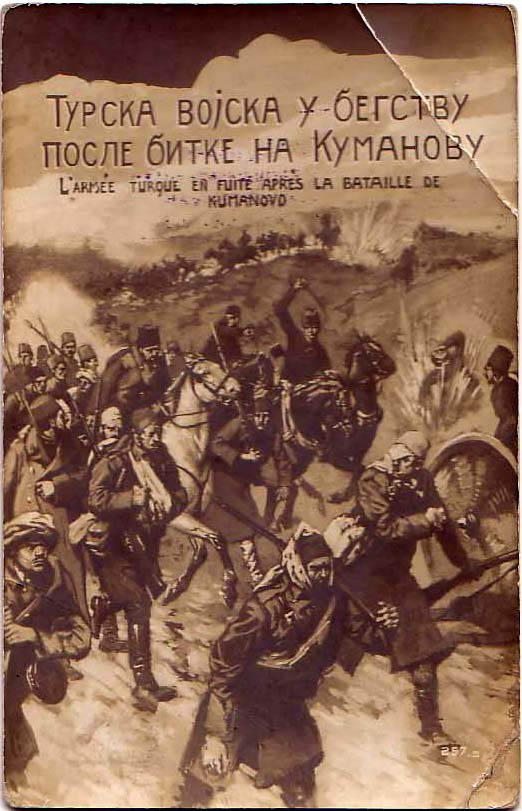
Serbian postcard: The Turkish army fleeing the battle of Kumanovo (23-24 October 1912, one week before the publication of the above article)

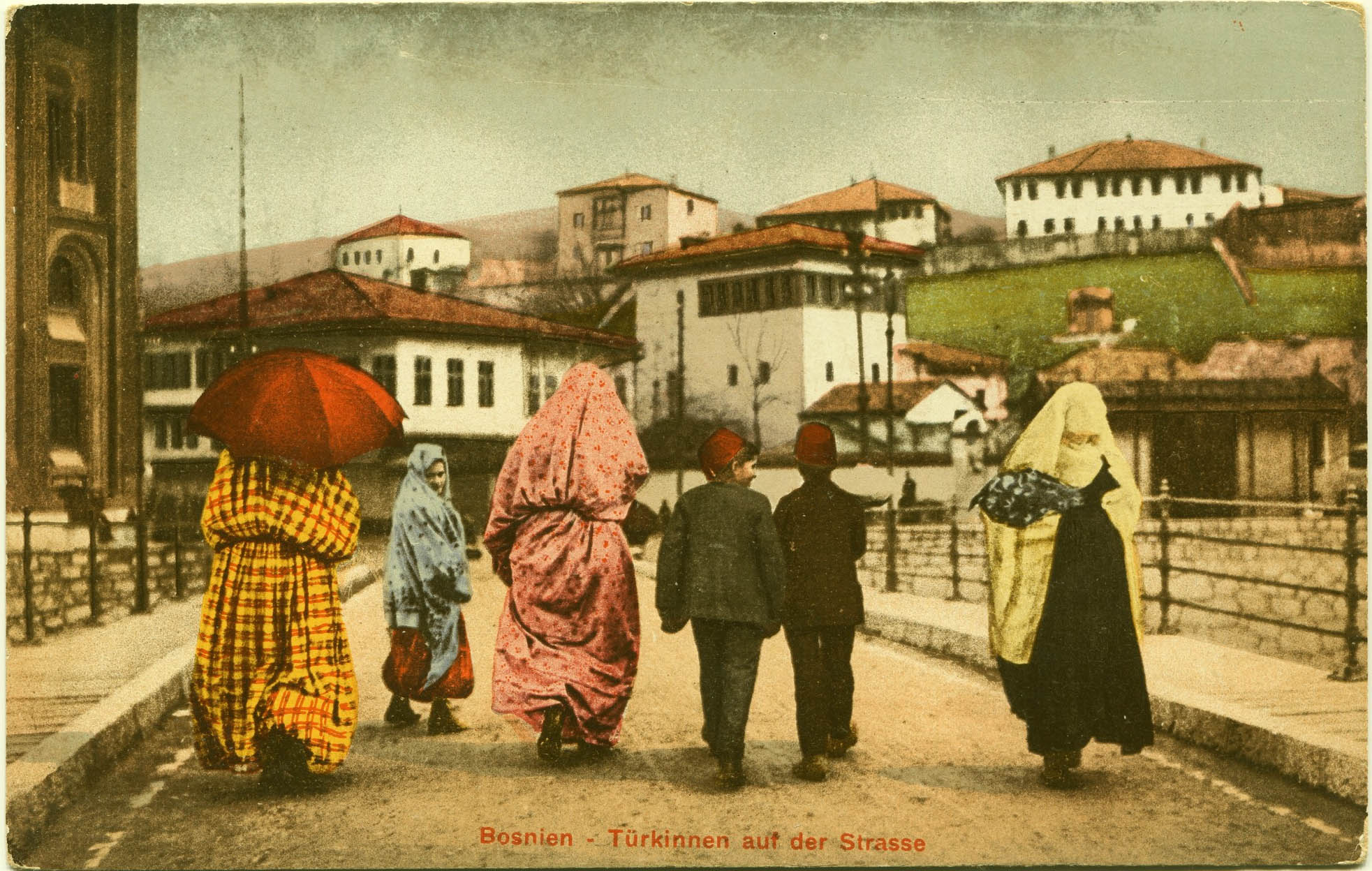
“Bosnia: Turkish women on the street”


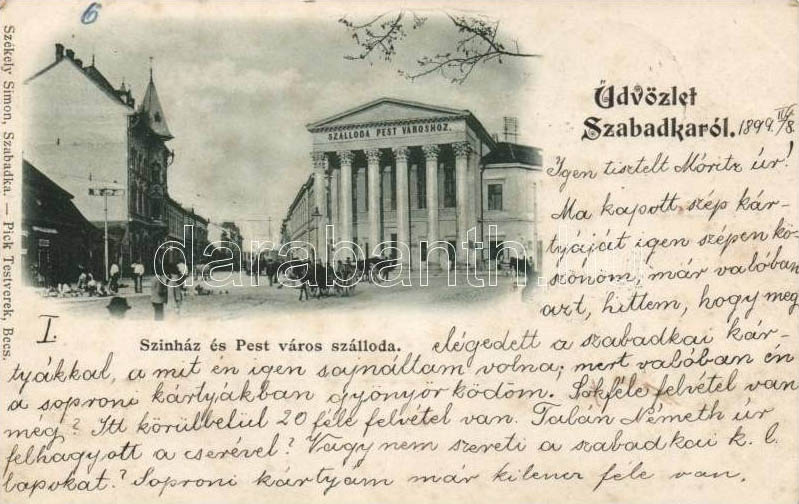
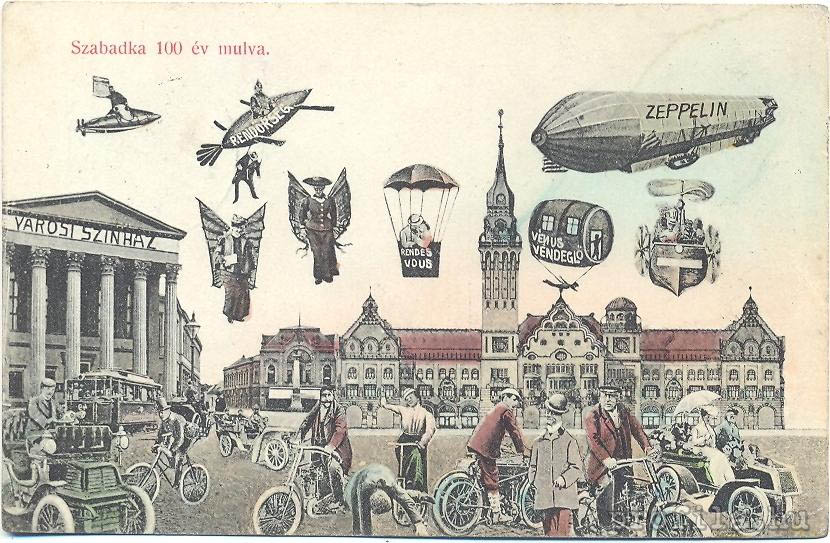
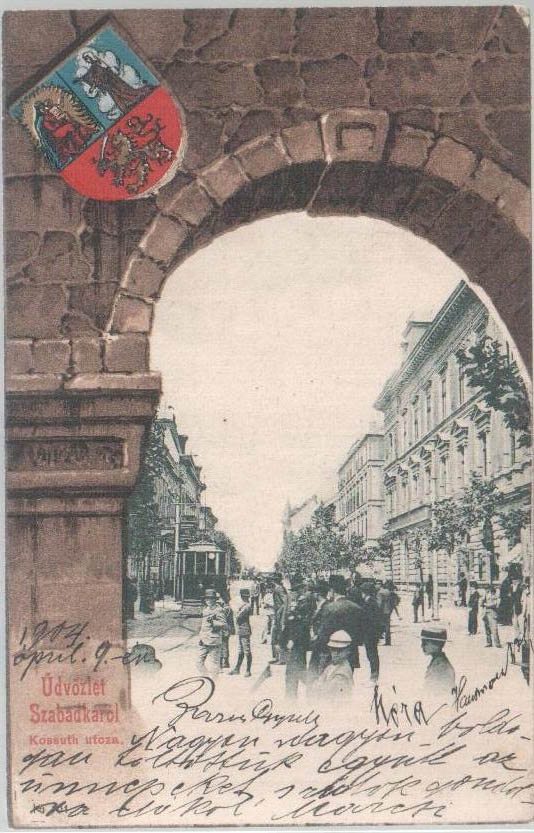
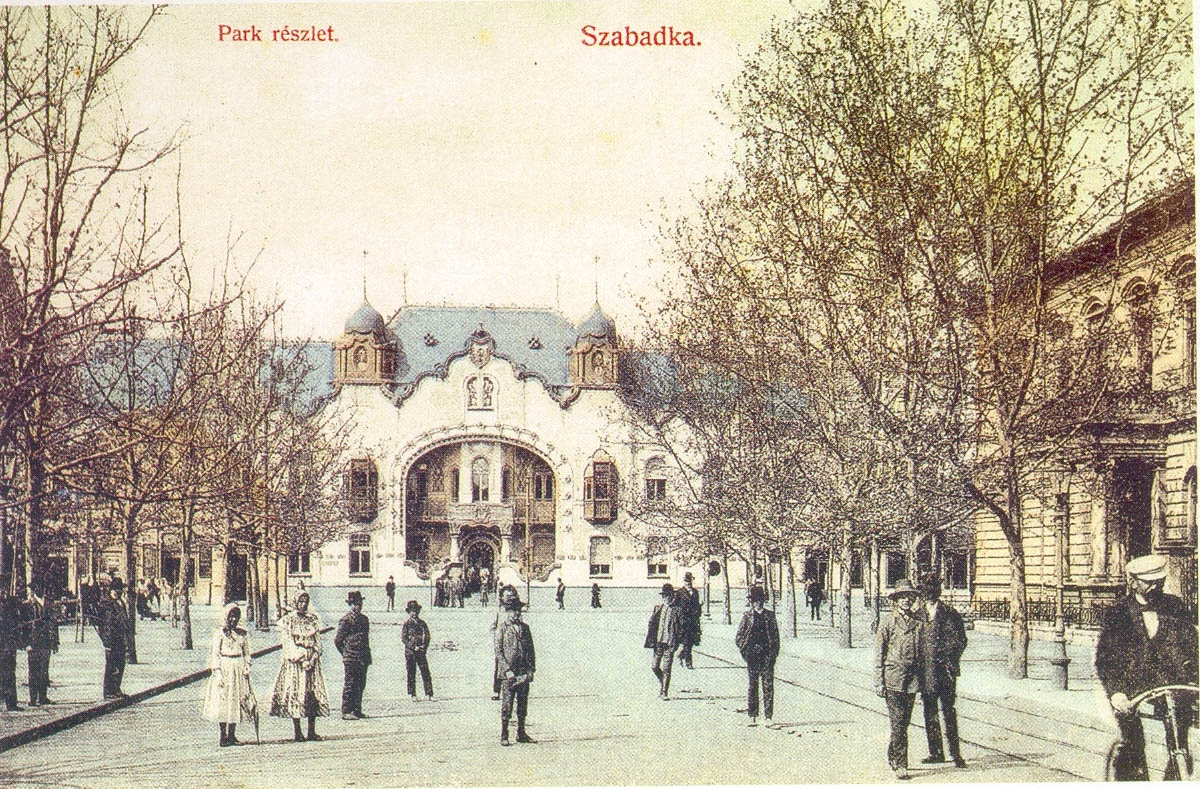
According to the plans of a century ago, Szabadka should look like this in this year. After all, the difference is not that big. The art nouveau town hall, inaugurated exactly a hundred years ago, on 15 September 1912, is still standing, and several bikes of more or less this age run throughout the city: we will publish a separate photo post on them. Only the flying objects are less, which can be explained by the proximity of the state border drawn up here in the meantime, and the prestigious City Theatre was recently demolished by the current city administration directed by Kosovo Serbians: a nation they did not yet reckon with in Szabadka a century ago.


Szabadka Unlimited, 1


Boško Krstić, local historian of Szabadka/Subotica, in his guide of 2006 illustrates with a small story the vibrant diversity and characteristic absurdity of this multiethnic city along the Hungarian border of Serbia, which has been traditionally open to everything new. A German tourist on his way to Greece passes in the night by the art nouveau spa of Szabadka-Palics, and hits a kangaroo that escaped from the Palics zoo. Soon the police arrives, and a black policeman gets out of the jeep. The German cries out loudly: “Where have I got to?”
To Szabadka.

“On the way back home in the night in Szabadka”

And that the atmosphere of the city has never been different, is well attested by some randomly picked articles from the most important local newspaper, the Bácsmegyei Napló – the first workplace of the great Hungarian authors Dezső Kosztolányi, Géza Csáth, Ervin Szabó – from exactly a century ago.

The Raichle Palace (1903), the first important art nouveau building in Hungary

Bácsmegyei Napló, 5 November 1912

From Shanghai to Szabadka
Three little Chinese

Yesterday three young Chinese people arrived to Szabadka. Three of those young people who nowadays come by tens of thousands from China and Japan, overflowing the cities of Europe, and selling small sculptures and fancy goods everywhere. In the meantime they observe the habits of the Europeans, get acquainted with their culture, learn a number of European languages, and then they go home to turn their experiences to profit.

Their job only apparently serves for their livelihood. Their main objective is to learn.

The three Chinese peddlers, as soon as they arrived, were taken by a policeman to the ambulance, where they got disinfected, as they arrived from a region threatened by cholera. The ambulance was unable to speak to them without an interpreter, so they asked our correspondent to talk to them and find out their identity.

Our correspondent talked to them in German. One of them said they knew German, but only a little – however, they speak much better in English.

Then they tell that they came from Shanghai. Their names are Lin Chi King, Tson Hong-Yen and Von-Ami Tü. They want to spend two days in Szabadka, and to sell figurines. Until now they were in Berlin, that’s where they have learned some German.

On the way here they heard that in China there was a revolution. They are very happy, and they are confident in the success of the revolultion. They want their country to become as strong as it is crowded. They tell that they have to suffer a lot, because the dynasty and the mandarins tyrannize over them. – That’s why the Chinese are so poor.

Then, replying to our question, they tell us to be very angry with the Japanese, because those are a stronger and more educated nation, which hurts them a lot. They love their country very much, and when they pronounce the name of their native city, Shanghai, their eyes brighten up. They want to travel throughout all Europe, and then will return to Shanghai.

After the conversation the ambulance disinfected the three Chinese, and led them to a cheap hostel. This evening they already go around the coffee houses and public places with their tiny idol gods. Then they will go from here to new cities and countries. – Years go by until the Heavenly Kingdom would see again his little sons, who by then will be richer in gold and in valuable experiences. In the new, reformed China they will perhaps take better use of their knowledge than of their gold.


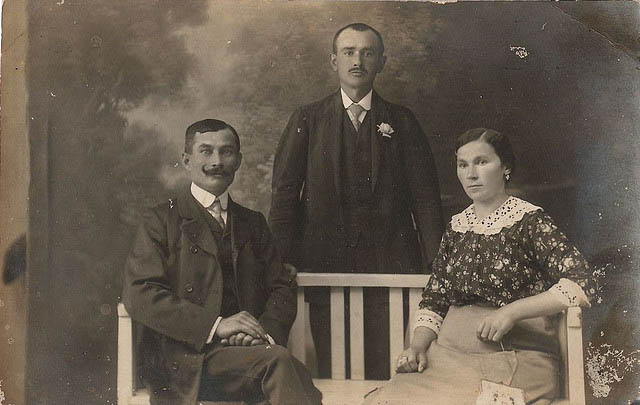
Three-person group photo. City photographer Imre Timár, Szabadka, Kossuth Street 20

Bácsmegyei Napló, 4 January 1912

A Native American seminarist in Szabadka
From our correspondent. Szabadka, 3 January

Yesterday afternoon an interesting young man walked about the streets of Szabadka. His clothing was the blue cassock of the Catholic seminarists, so he was not conspicuous to anybody.

This seminarist is a red-skinned Native Indian from America.

He is called Philip Gordon, and came from the state of Minnesota in Northern America. His grandfather may have hunted for scalps, his father was perhaps still a nomad roaming the endless American plains, and the son will probably become a bishop.

Philip Gordon was baptized, and took a liking to the priestly career. Now he sailed across the ocean to the Old World, and will go to Innsbruck to learn theology.

He got to Szabadka by having got acquainted with a seminarist from the village of Bajmok, Ernő Rickert, and he invited him now to us.

The Native American speaks in English, French and some German as well.

Whatever he has hitherto seen from Hungary was very pleasant to him, and he feels quite well here.

Philip Gordon remains in Bajmok only a few days, and then he goes to Innsbruck. And a few years later he will spread Christianity among his red-skinned siblings.


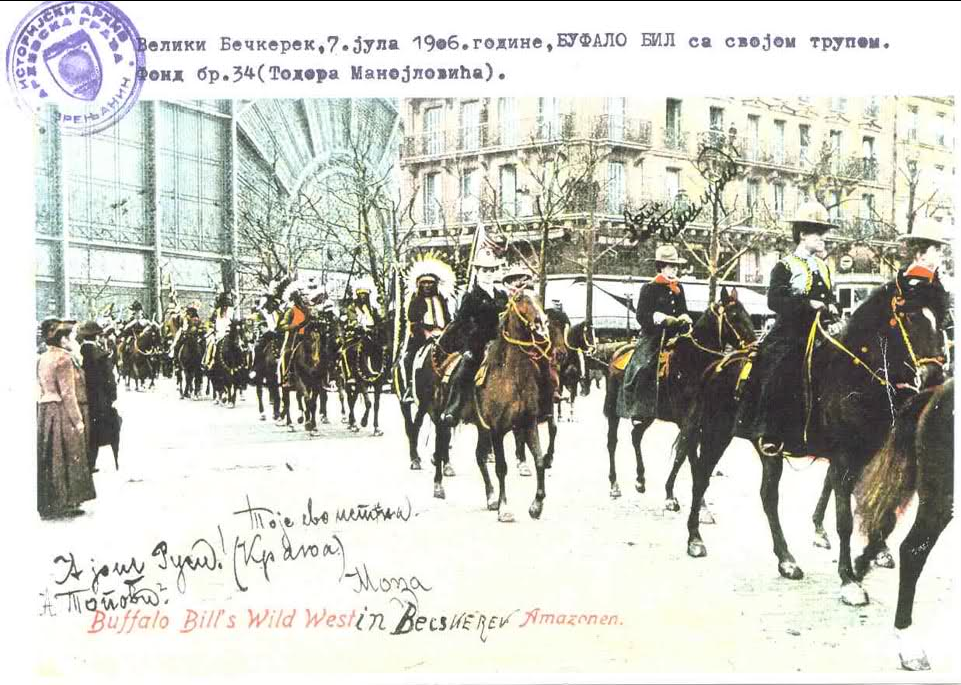
Not Szabadka, but a similarly bizarre nearby Hungarian town in Vojvodina: Buffalo Bill and his Native Americans in Nagybecskerek (Zrenjanin) in 1906. On Nagybecskerek, that is, New Barcelona, see our earlier post.

Bácsmegyei Napló, 18 November 1911

Russian secrets
A Russian teacher collects money for the arrested Russian revolutionaries
From our correspondent, Szabadka, 14 November


A young, blond, well-looking girl arrived today in Szabadka. Her name is Rosa Arendartotsky. She is a university student, who came from Riga to Szabadka to raise funds for the families of imprisoned Russian socialists.

Rosa Arendartotski certifies with documents issued by the Russian and German socialists her mission, which she tries to carry out with great enthusiasm and toughness. So far she went about Serbia and Germany, everywhere raising funds for the families of the revolutionaries.

The young Russian woman is selling pencils and small items, for which everyone pays as much as his charitable inclinations dictate to him, but Arendartotski does not accept any donation without giving a remuneration for it in turn.

She only sells the pencils to people, about whom she previously learned to be either socialists or sympathizers.

Arendartotski also has a sister who travels with the same mission about France and Britain. They both are extremely intelligent women, with a blazing inner flame to break down the Tsarist autocracy. They firmly believe to have, just like every freely thinking citizen of Russia, a mission to liberate the Russian people, whose fulfillment is their sacred duty.

The two girls have been far from their homeland for six months, and their tour will take three more months. Then they return to Russia where they will continue their mission for freedom and progress.


Bácsmegyei Napló, 10 November 1911

The deceitful Russian refugees

The Bácsmegyei Napló has already reported that a large number of Russian Jews peddled about the city, and begged for donations on the grounds that they were victims of the pogroms. The police collared the swindlers, about whom it turned out that they had nothing to do with the Russian events. Today arrived also the families of the swindlers, women and children, who, in the midst of an awesome hubbub, went to the police. There they required the deportation of their husbands to home, because they are confident that after that they will be able to drift back again to Hungary.


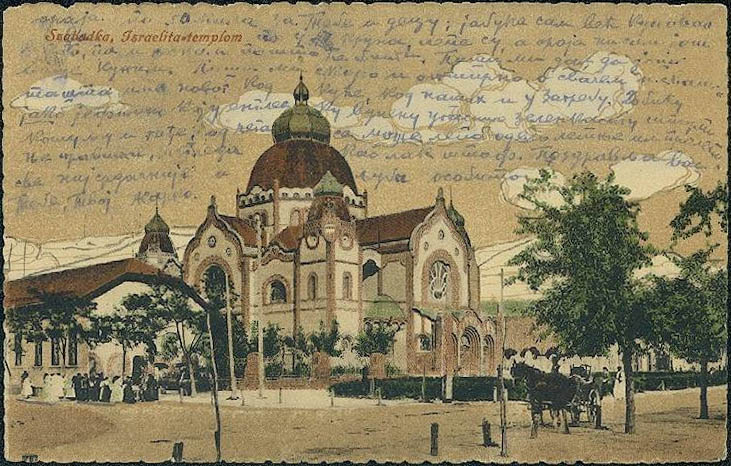
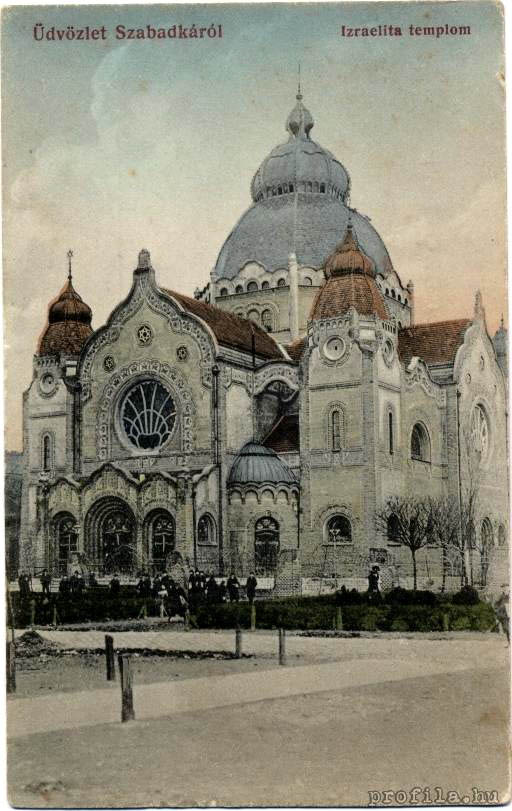
The synagogue of Szabadka (1901), one of the most majestic art nouveau buildings in Hungary

Those who personally want to experience this unlimitedness of Szabadka, should check the program Szabadka Unlimited, organized by the Hungarian Jewish Cultural Association at the weekend from 4 to 7 October. Besides a number of eminent local experts and events, I also will be there as the guide of the art nouveau architecture tours in Szabadka and its high-class hundred years old spa, Palics.  Just look at the rich program: surely you cannot resist.