Switch over to our new blog! • ¡Pásese a nuestro nuevo blog!

The renewed version of our blog, with more features, a richer design, and available in nine languages, can be read here: https://wangriver.com

The new version also includes the old posts, often in expanded form. If you are curious about the updated version of this post, replace “riowang.blogspot.com/” in the URL with “riowang.studiolum.com/”, and the new link will most likely lead you there.


La versión renovada de nuestro blog, con más herramientas, un diseño más rico y disponible en nueve idiomas, se puede leer aquí: https://riowang.com

La nueva versión también incluye las publicaciones antiguas, a menudo en una forma ampliada. Si tiene curiosidad por la versión actualizada de esta entrada, sustituya «riowang.blogspot.com/» en la URL por «riowang.studiolum.com/es/», y el nuevo enlace probablemente le llevará allí.

Mostrando entradas con la etiqueta Ahmatova; Anna. Mostrar todas las entradas

The demon of speed


The airport of Mallorca has grown like a bad disease on the plain of the island, once a fertile area of orchards and pasture. It can not be otherwise once you decided to feed the frenzied tourism industry. Thus arriving and leaving by boat from the port of Palma, which for many years was the most usual way to go to Barcelona, Valencia and the other nearby ports and islands, is now a rarity. Only those who have a phobia of flying, who must go by car or who have some strange and powerful reason, choose the sea. Two weeks ago we had one such reason to go to Barcelona by sea, and we remembered those rickety and extremely uncomfortable boats with a strong smell of diesel that we had before. But nowadays the ferryboats are large and comfortable, and, most important, you travel with them at a speed that still allows you to notice that you are traveling, that your body is moving from one place to another place. At a speed that allows you to adjust your thoughts and feelings to the infinite points of arrival making up a voyage, without leaving the soul behind at the starting point.


It was García Márquez to say that the maximum speed at which his soul could travel was about the passing of a donkey, and so after an air travel it took him days to meet his soul again. But this is already past time. Today, by contrast, it can also happen that our soul, so badly accustomed, proceeds faster than the boat and arrives in Barcelona before us, and that’s why we stroll about so impatiently on the board.


Даль рухнула, и пошатнулось время,
Бес скорости стал пяткою на темя
Великих гор и повернул поток,
Отравленным в земле лежало семя,
Отравленный бежал по веткам сок.
Людское мощно вымирало племя,
Но знали все, что очень близок срок.
Distance has collapsed and time shattered,
the demon of speed has put its feet on the peaks
of the highest mountains and diverted the brooks,
poisoned seeds fell on the earth,
poisoned fluid flew in the branches.
The powerful tribe of humans has died out,
all knew that the end was imminent.


Anna Akhmatova, 1960

El demonio de la rapidez


El aeropuerto de Mallorca ha crecido como una mala enfermedad sobre la llanura de la isla, antes una zona fértil de huertos y pasto. No puede ser de otra manera si se quiere alimentar la frenética industria turística. Así, salir y entrar en barco desde el puerto de Palma, que durante muchos años era lo más habitual para ir a Barcelona, Valencia, las otras islas o puertos cercanos, es hoy una rareza. Solo quienes tienen fobia a volar, quienes deben ir con el coche o albergan alguna extraña y poderosa razón, eligen el mar. Nosotros tuvimos que ir a Barcelona hace unas dos semanas y recordamos aquellos barcos destartalados, con un fuerte olor a gasóleo, incomodísimos, que nos llevaban antes. Los barcos de línea de ahora son grandes y acogedores, y lo más importante es que en ellos, como entonces, se viaja a una velocidad que aún permite notar que se está viajando, que el cuerpo está yendo de un lugar a otro lugar; una velocidad que concede adecuar los pensamientos y las sensaciones a los infinitos puntos de llegada en que consiste todo viaje, sin dejar el alma atrás, abandonada en el punto de partida.


García Márquez consideraba que la velocidad máxima a la que podía viajar su alma era aproximadamente la del paso de un burro, así que tardaba días en volver a encontrarse con ella después de un viaje en avión. Esto era antes. Hoy, al contrario, hasta puede ser que el alma, ya tan mal acostumbrada, vaya más rápido que el barco y llegue a Barcelona antes que nosotros, y por eso damos vueltas impacientes por cubierta.


Даль рухнула, и пошатнулось время,
Бес скорости стал пяткою на темя
Великих гор и повернул поток,
Отравленным в земле лежало семя,
Отравленный бежал по веткам сок.
Людское мощно вымирало племя,
Но знали все, что очень близок срок.
La lejanía se desmoronaba y se agitaba el tiempo,
el demonio de la rapidez plantaba el pie en la cumbre
de las más altas montañas y las corrientes desviaba,
en la tierra envenenada yacía la simiente,
corría por el tronco la savia envenenada.
La poderosa tribu humana se extinguía,
todos sabían que el final estaba allí cerca.


Ana Akhmátova, 1960

Listening to the bells

Late nineteenth century, a quarter to twelve, Rome. It’s hot.


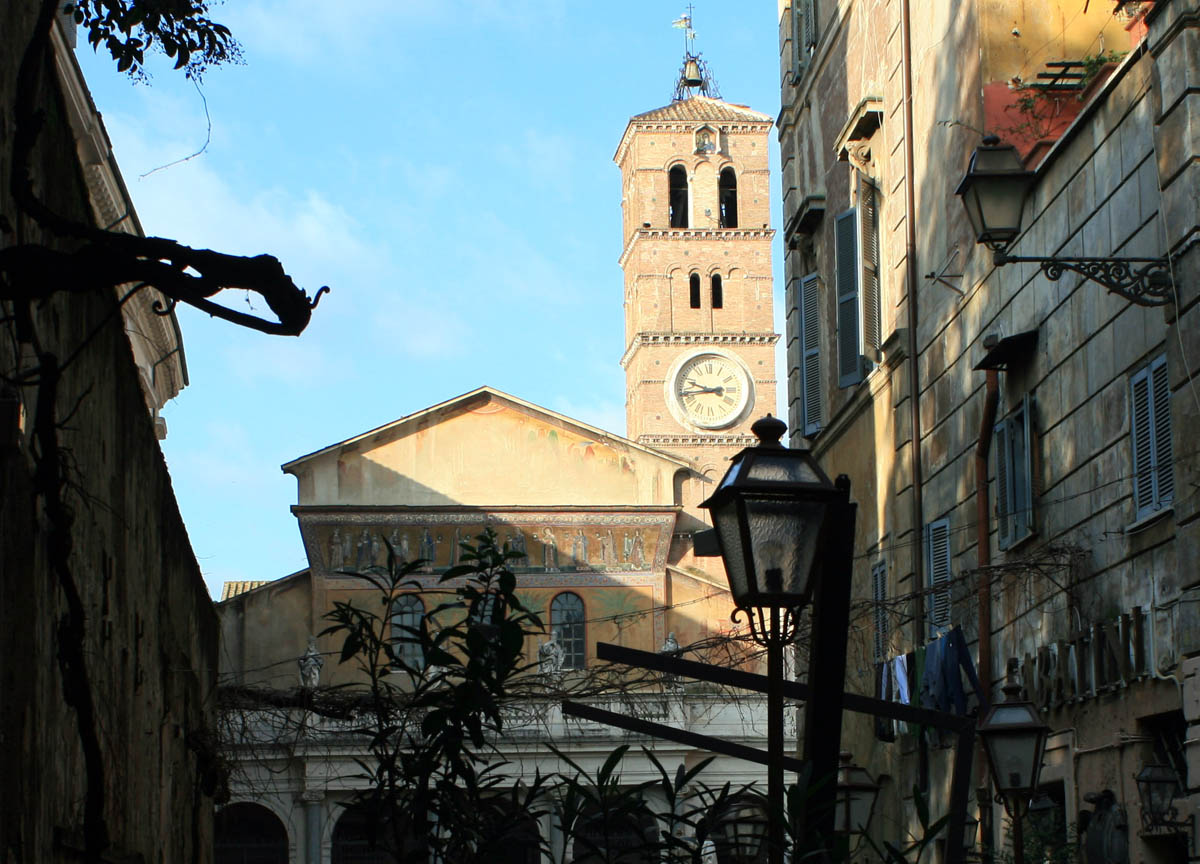
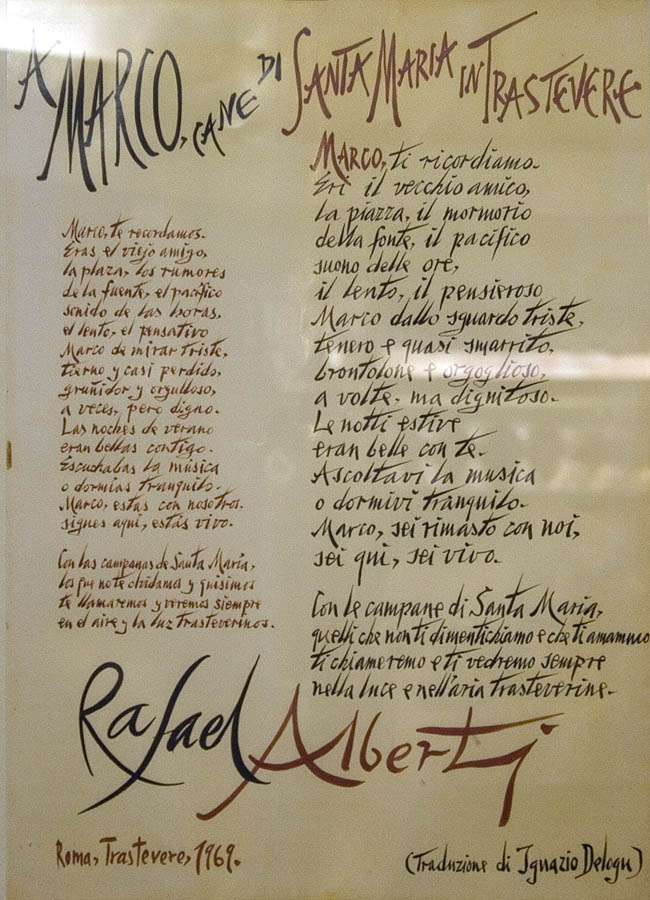
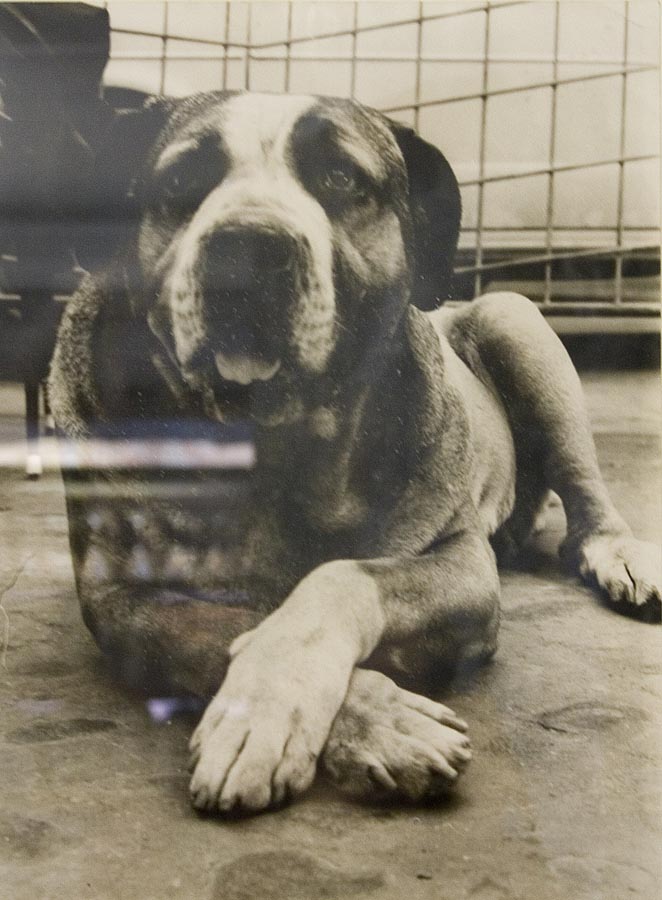
A bar in the Trastevere, in front of Santa Maria. A late February Sunday, a quarter to ten in the morning. In the bar there is only a Roman family with two little children, having a breakfast. Orange juice, smell of coffee. Two pictures on the entrance wall, not particularly drawing attention.


Marco, te recordamos.
Eras el viejo amigo,
la plaza, los rumores
de la fuente, el pacífico
sonido de las horas,
el lento, el pensativo
Marco de mirar triste,
tierno y casi perdido,
gruñidor y orgulloso,
a veces, pero digno.
Las noches de verano
eran bellas contigo.
Escuchabas la música
o dormías tranquilo.
Marco, estás con nosotros,
sigues aquí, estas vivo.

Con las campanas de Santa María,
los que no te olvidamos y quisimos
te llamaremos y veremos siempre
en el aire y la luz trasteverinos.
Marco, we’ll remember you.
You were our old friend,
the square itself, the gurgle
of the fountain, the peaceful
sound of the hours,
the slow, the thoughtful
Marco of the sad
and tender and almost lost look,
the grumbling and proud
sometimes, but always decent.
Summer nights
were beautiful with you.
You were listening to music
or tranquilly sleeping.
Marco, you’re with us
still here, alive.

With the bells of the Santa Maria
we, who love you and do not forget you
will always call you and will always see you
in the air and light of the Trastevere.

The image of that morning in Rome and the poem to Marco, also included by Alberti in his Roma, peligro para caminantes (1968) came to my mind as I was reading Ahmatova, translated into Spanish precisely by Alberti and María Teresa León:

Но я предупреждаю вас,
Что живу в последний раз.
Ни ласточкой, ни кленом,
Ни тростником и ни звездой,
Ни родниковою водой,
Ни колокольным звоном -
Не стану я людей смущать
И сны чужие навещать
Неутоленным стоном.
But I warn you
that I live for the last time.
Neither as a swallow, nor as an acer,
neither as a reed nor as a star,
the gurgling water of a fountain
or the sound of the bells –
I will not perturb people
nor confuse others’ dreams
with my unsatisfied moaning.

And each time when I hear the bells around my house, and the sound of the quarters of the town house’s clock, I think that the bells are the last survivors of something that barely exists, or rather the echos of an Atlantis which is all over long ago. And I think that on the day – which will come – when the bells will not ring any more, I will have few interest in staying alive.

Oír campanas

Un día de fines del siglo diecinueve, a las doce menos cuarto, en Roma. Hace calor.


En Santa María in Trastevere, al otro lado de la iglesia, hay un bar. Es un domingo del pasado febrero, a las diez menos cuarto, y en el bar solo hay una familia romana con dos niños pequeños que han bajado a desayunar. Zumo de naranja, olor a café. En la pared de la entrada cuelgan dos cuadros que no llaman la atención.


Marco, te recordamos.
Eras el viejo amigo,
la plaza, los rumores
de la fuente, el pacífico
sonido de las horas,
el lento, el pensativo
Marco de mirar triste,
tierno y casi perdido,
gruñidor y orgulloso,
a veces, pero digno.
Las noches de verano
eran bellas contigo.
Escuchabas la música
o dormías tranquilo.
Marco, estás con nosotros,
sigues aquí, estas vivo.

Con las campanas de Santa María,
los que no te olvidamos y quisimos
te llamaremos y veremos siempre
en el aire y la luz trasteverinos.


La imagen de aquella mañana en Roma y el poema al perro Marco que Alberti incluyó en su Roma, peligro para caminantes me han venido a la memoria al leer hoy estos versos de Ana Ajmátova, una poeta que Alberti y María Teresa León tradujeron.

Но я предупреждаю вас,
Что живу в последний раз.
Ни ласточкой, ни кленом,
Ни тростником и ни звездой,
Ни родниковою водой,
Ни колокольным звоном -
Не стану я людей смущать
И сны чужие навещать
Неутоленным стоном.
Pero yo os advierto que vivo
por última vez.
Ni como golondrina, ni como acero,
ni como junco, ni como estrella,
ni como agua que brota,
ni como sonido de campanas
turbaré a la gente,
y no visitaré los sueños de los otros
con un gemido insatisfecho.

Y cada vez que oigo sonar las campanas de las iglesias alrededor de mi casa, y dar los cuartos a la campana del reloj del ayuntamiento, pienso que en sí mismas las campanas son una pervivencia de algo que apenas existe, el eco de un mundo que se acaba o que ya acabó hace tiempo. Pienso también que el día (que llegará) en que no suenen las campanas, a mí me interesará muy poco seguir vivo.