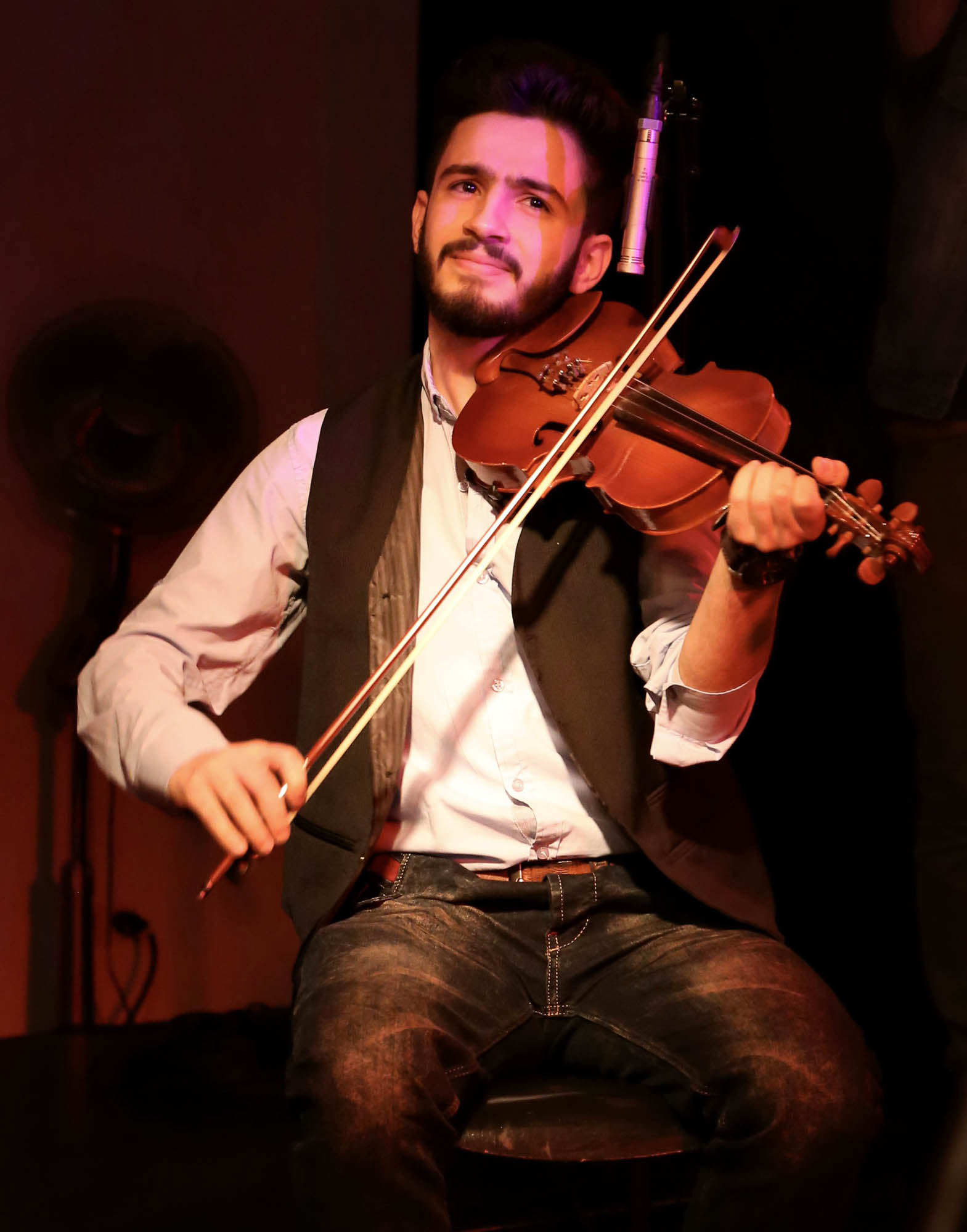
 I know these songs. They play in the taxi, as soon as you leave for the city from Khomenei Airport, they rumble in the kebab shop and in the bazaar, they stiffen your mind during the all-day bus route across the desert. But I have never seen people publicly dancing to them, especially not with a glass of whisky in the hand, and particularly not in the company of girls with uncovered hair and in skirts that at the thigh. Any of these subplots individually would call out for a few years of prison in Iran. But not in Berlin, in Neukölln’s Werkstatt der Kulturen, in the cellar of which a Noruz celebration, a spring New Year’s disco is being held tonight. The songs are the characteristic pieces of rollicking Iranian music, laments in Persian about the torment of love and the inevitability of adulthood, singing Egyptian pop in Arabic, which is becoming increasingly fashionable in Iran, or changing to Iranian-Azerbaijani Torki or Kurdish folk songs for the sake of the Iranian ethnic minorities present in the room. The audience still responds as they did at home, the boys dance only with boys and the girls with girls, but at least no longer in separate rooms, but in a common space, laughing, embarrassed, at the unusual situation. The children wander about along the edge of the stage, they already grow into the situation, imitating the adults, until around midnight they are taken away to sleep.
Habibi (Sweetheart), with Arabic text

And the bonus: Üsküdara, the Balkan migrating melody, about which we have already written, tonight in its Iranian version


 Come with us to…
 Atlantis
 Bestiary
 Bohemia+Prague
 Books, exhibitions, music, film
 Brave old world
 Caucasus
 Cemeteries
 Crimea
 Get to know the
 Images of the East
 Lightwriting
 Lwów/Lemberg
 Mallorca
 Message on the wall
 The Museum of Propaganda
 Odessa
 Paper Museum
 Persian letters
 The Jewish heritage


No hay comentarios:
Publicar un comentario