Switch over to our new blog! • ¡Pásese a nuestro nuevo blog!

The renewed version of our blog, with more features, a richer design, and available in nine languages, can be read here: https://wangriver.com

The new version also includes the old posts, often in expanded form. If you are curious about the updated version of this post, replace “riowang.blogspot.com/” in the URL with “riowang.studiolum.com/”, and the new link will most likely lead you there.


La versión renovada de nuestro blog, con más herramientas, un diseño más rico y disponible en nueve idiomas, se puede leer aquí: https://riowang.com

La nueva versión también incluye las publicaciones antiguas, a menudo en una forma ampliada. Si tiene curiosidad por la versión actualizada de esta entrada, sustituya «riowang.blogspot.com/» en la URL por «riowang.studiolum.com/es/», y el nuevo enlace probablemente le llevará allí.

Estatuas errantes en Tirana

El espectro del comunismo recorre Tirana en forma de estatuas errantes que no encuentran su lugar.

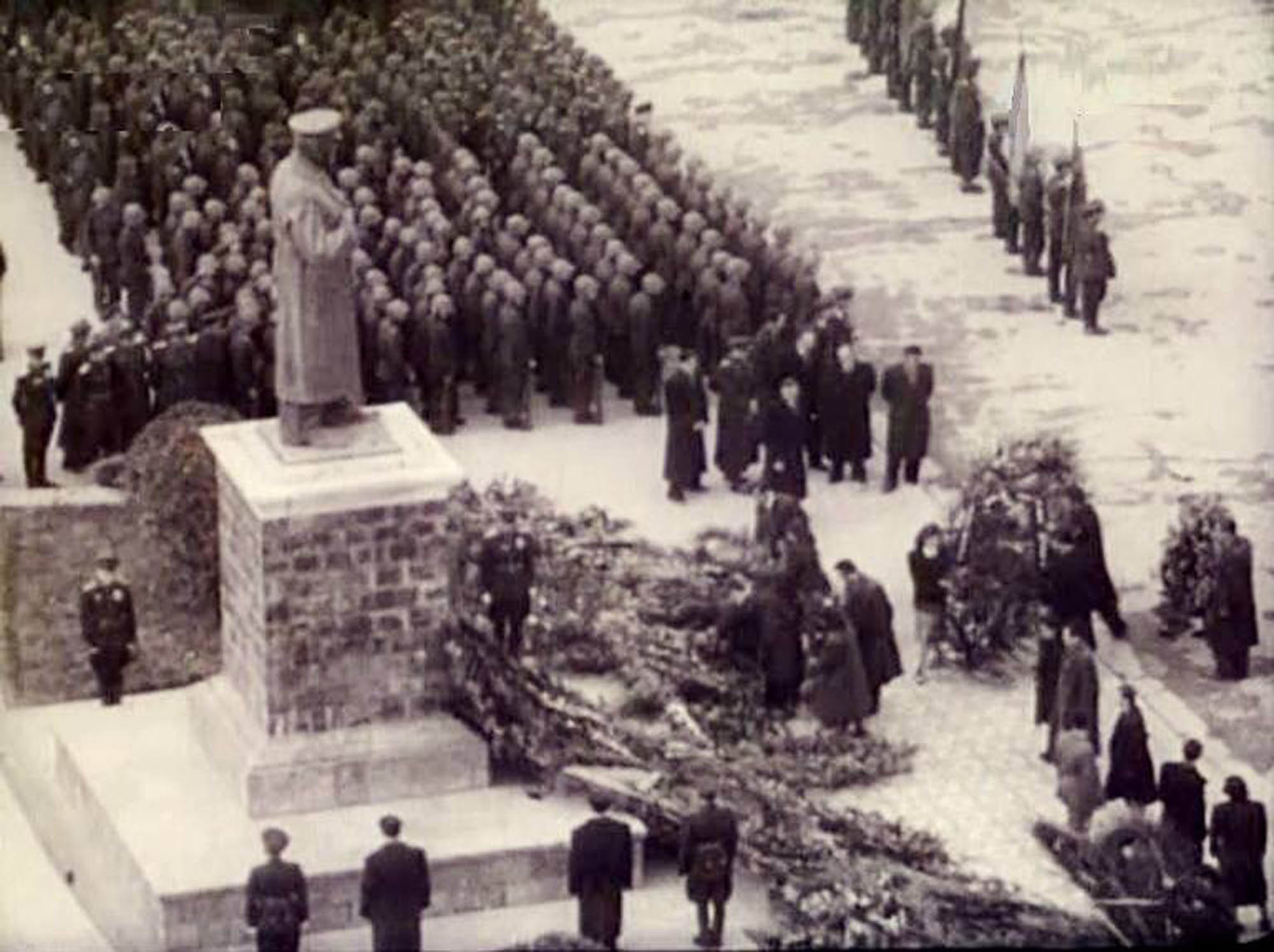
Las monumentales estatuas de bronce de Stalin y Lenin se erigían, antes de la caída del socialismo, en dos de las principales plazas de Tirana. La de Stalin ocupaba la plaza principal, sobre el pedestal donde hoy se encuentra la estatua de Skanderbeg (ya escribí «Pero la piedra permanece», sobre el papel imprescindible que jugaron los pedestales de los monumentos de regímenes anteriores como bases ready-made para las estatuas del nuevo sistema). La de Lenin, hacia el sur, en el bulevar Dëshmorët e Kombit, es decir, de los Mártires del Pueblo.

Con el cambio de régimen, los manifestantes de 1991 derribaron de sus pedestales estos símbolos que se habían vuelto insufribles. Pero no tuvieron la previsión de machacarlos, como sí en Budapest en 1956, y aquellos líderes literalmente caídos hallaron refugio en el patio trasero de la Academia de Bellas Artes, a la sombra del antiguo palacio real, frente a la pirámide construida como mausoleo de Enver Hoxha. Allí sobrevivieron las accidentadas décadas de la democracia albanesa, con la esperanza de que el pueblo regresara algún día al culto a la personalidad más acorde con sus tradiciones, y entonces volvería a ser su hora. Mientras tanto no estaban a la vista de nadie, pero quien sabía de ellos podía entrar libremente al patio y fotografiarlos.
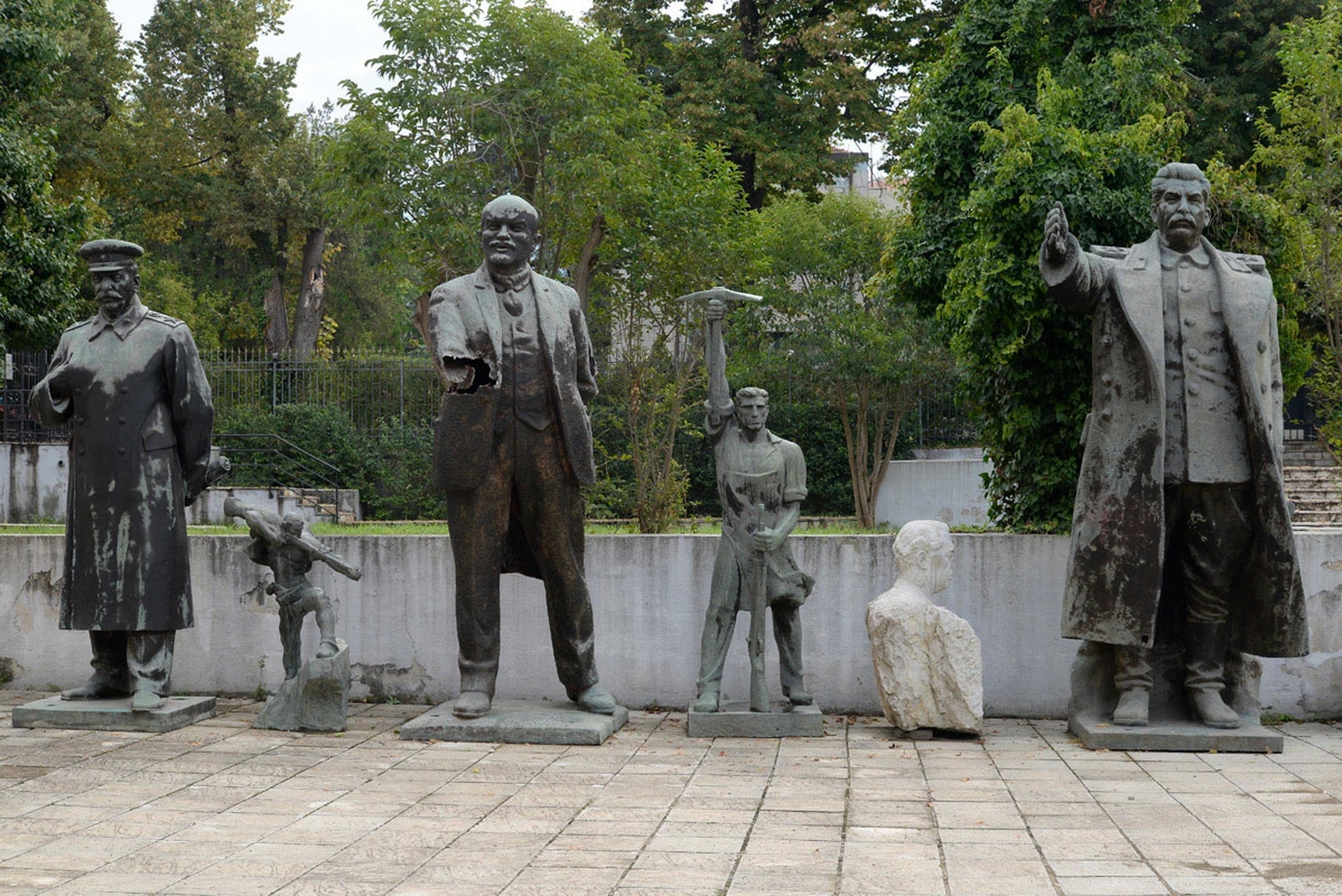
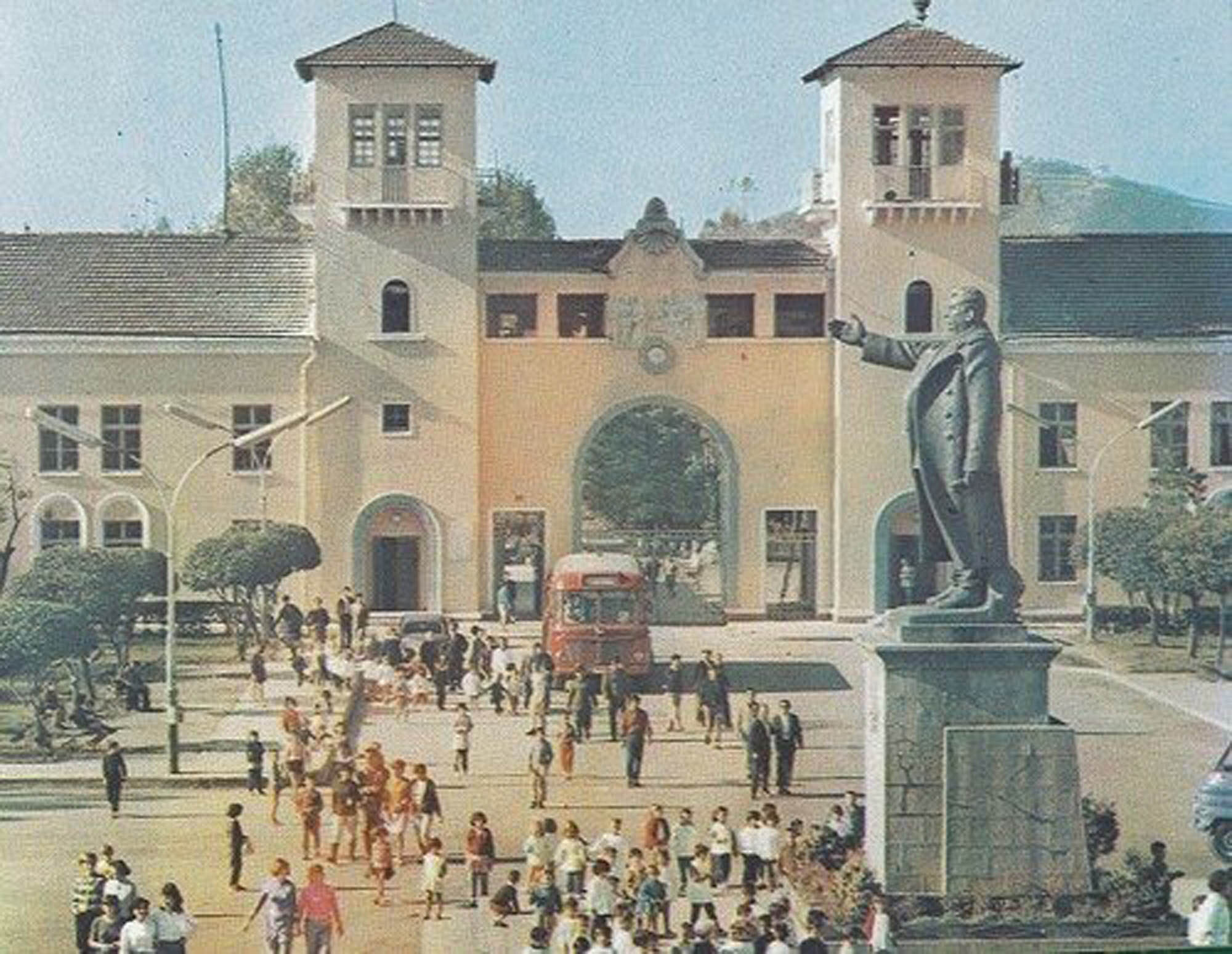
La otra gran estatua de Stalin, visible en el lado derecho de la foto, no estaba en el centro de la ciudad, pero sí en un lugar destacado, delante del ayuntamiento del barrio Kombinat, al suroeste del centro y sede de las grandes fábricas textiles, como muestra la foto siguiente:
Sin embargo, al amparo del Covid, como en otros lugares, mucho cosas cambiaron también en Tirana. Tras cinco años quise volver a visitar el patio, pero me encontré con una escena como la de Boka en Los muchachos de la calle Pál. En el patio y sus alrededores se alzaba ya la estructura de hormigón de un nuevo edificio; las estatuas habían desaparecido. Pregunté al policía de guardia frente a la entrada, pero al mencionar los nombres su rostro se endureció y en inglés me respondió que no sabía inglés.

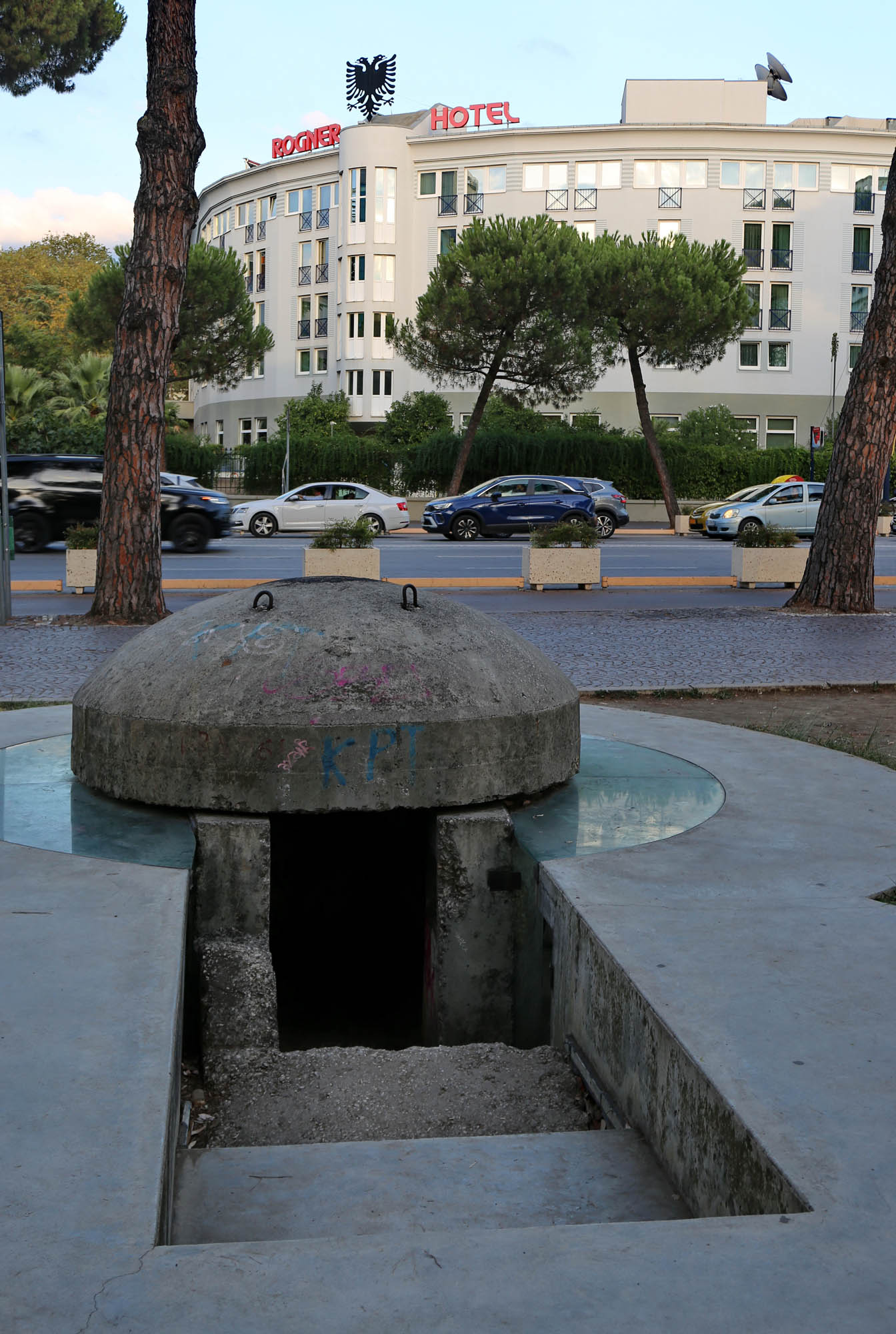
Junto al búnker de hormigón dedicado a las víctimas del comunismo, un guía improvisado se dirigía a unos turistas italianos. Le pregunté y con soltura me indicó el camino hacia la villa de Mehmet Shehu.

Mehmet Shehu, que pasó de hijo de mullah a revolucionario ardiente, voluntario en la Guerra Civil española y fanático seguidor de Stalin, se ganó el reconocimiento de Enver Hoxha con su intransigente purga como comandante en jefe del ejército popular albanés tras 1944. Hoxha le recompensó con el puesto vacante de Koçi Xoxe, ministro del Interior purgado. Durante toda su vida Shehu fue la figura número dos tras Hoxha, manteniendo siempre una línea dura. Cuando en una visita a Moscú Jruschov le preguntó cuál consideraba el mayor crimen de Stalin, Shehu le respondió sin rodeos: “que no lo eliminó a usted a tiempo”. Fue él también quien selló la alianza fraterna entre los dos últimas bastiones del estalinismo, China y Albania, que perduró hasta la caída del sistema.

Pero Shehu no sobrevivió hasta entonces. El 17 de diciembre de 1981 fue hallado muerto en su villa, con un disparo en el pecho. La versión oficial habló de suicidio. Poco después, arrestaron a su hermano, esposa, hijo y dos hijas. Todos murieron en prisión en los años 80. Su hijo menor, Bashkim Shehu, tras la caída del socialismo, intentó reivindicar su memoria afirmando que su padre fue víctima de un asesinato político, y lo dijo abiertamente en televisión. Como suele ocurrir en las mitologías, detrás de los hechos había que buscar a una mujer: el hermano de Shehu se había enamorado de una mujer de familia poco afín al régimen; algunos de sus parientes estaban en EE.UU. y otros, no por casualidad, en cárceles albanesas. El jefe de la temida policía secreta, la Sigurimi, intentó convencer a Shehu de que influyera en su hermano, pero él solo respondió: «Es joven. Que ame.»

La versión de Bashkim Shehu cobra fuerza porque tras la muerte de su padre no solo su familia desapareció en prisión, sino que él mismo resultó ser un astuto espía yugoslavo, estadounidense y ruso. Enver Hoxha lo escribió abiertamente en su libro de 1982 Los titistas, dedicando varios capítulos a describir su perfidia.
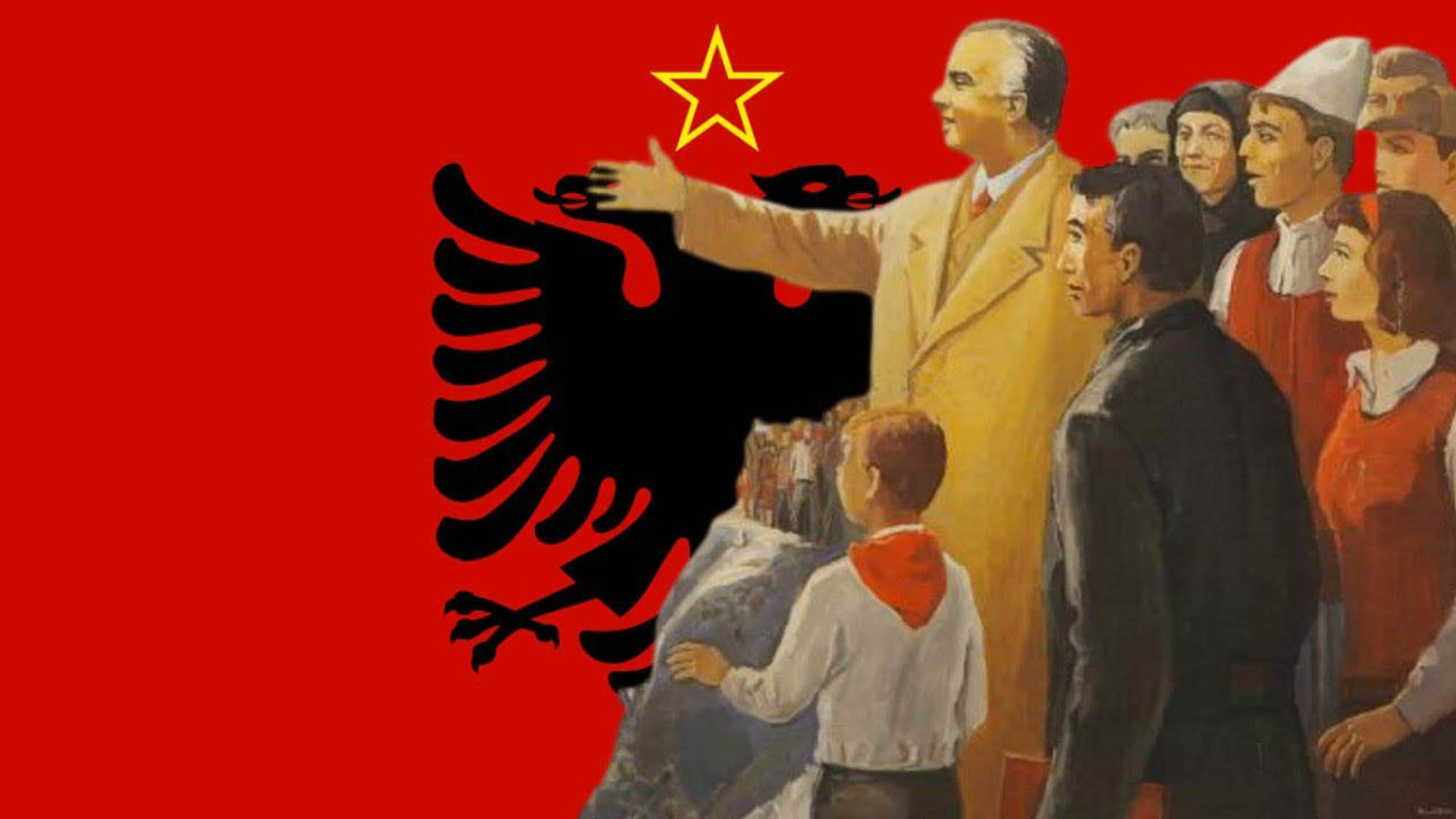
Sobre la caída y muerte de Shehu apareció otro libro mucho más legible, años después de los hechos y del fin del régimen: El sucesor (Pasardhësi), de Ismail Kadaré, considerada quizá su obra más grande.
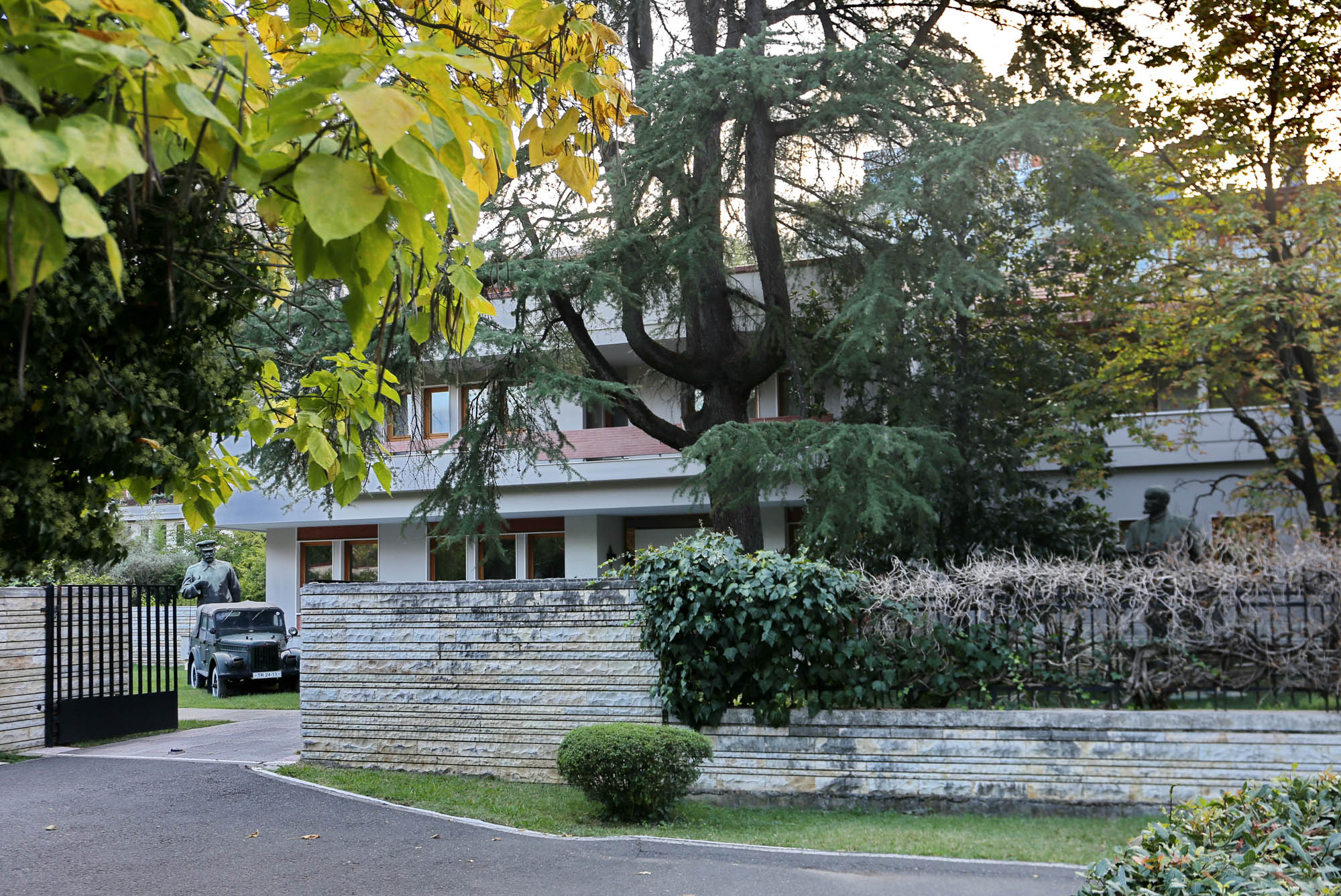
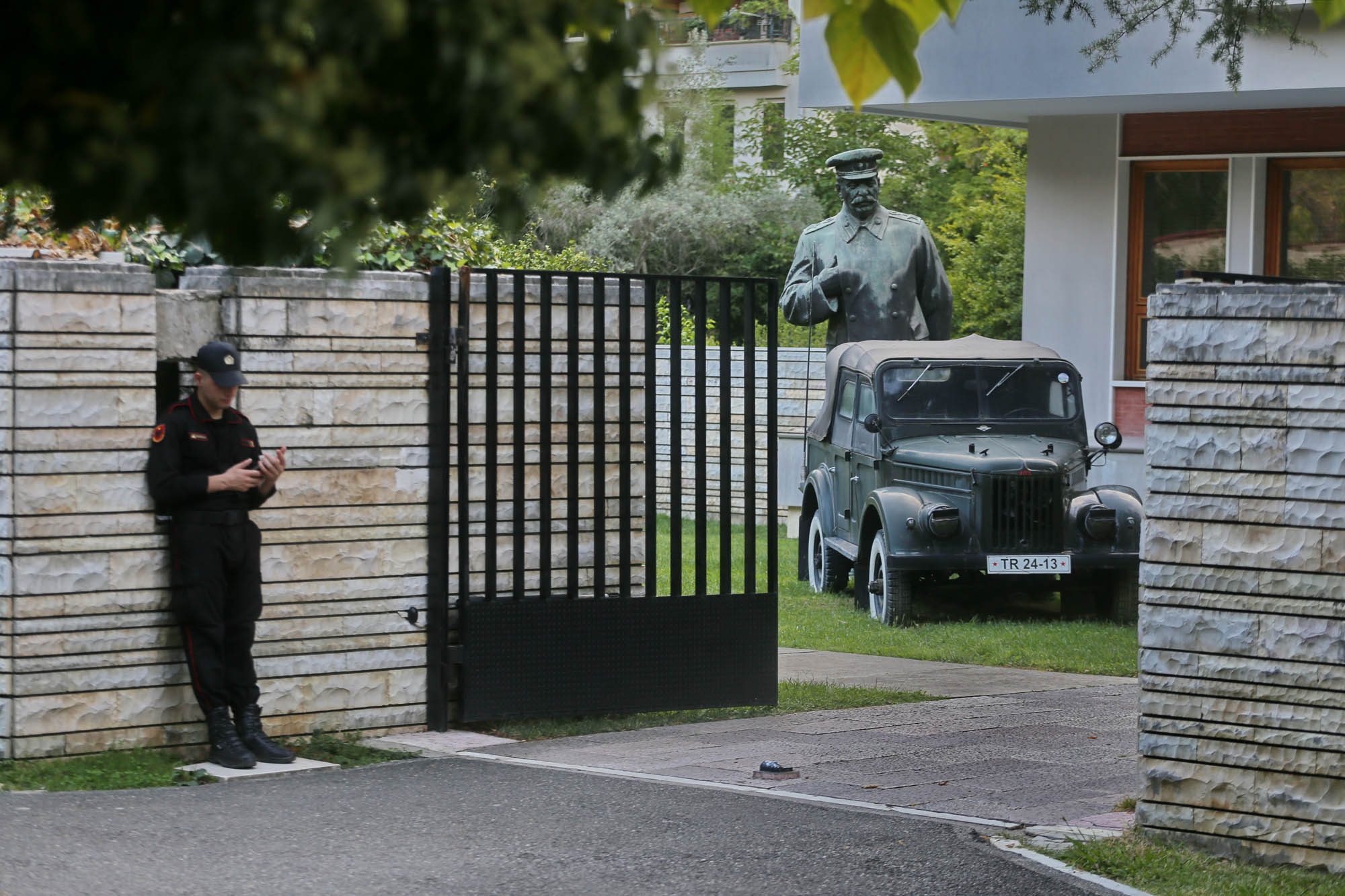
Pues bien, en su jardín hallaron un nuevo hogar Stalin y Lenin. En el mejor sitio, junto a su último devoto. Una señal al inicio del camino privado prohíbe el paso, prohibición que refuerza un guardia armado con gestos inequívocos. Dicen que la casa la usa el gobierno para actos protocolarios. En cualquier caso, vimos salir un coche negro blindado, y el guardia lo saludó militarmente. ¿Acaso sigue siendo sede de la policía secreta? Sería acorde con el espíritu de las estatuas.

Aunque no podamos acercarnos a la puerta, desde el parque vecino podemos fotografiar la villa y las estatuas visibles. Bajo los árboles se distingue bien la cabeza de Lenin, y justo tras la puerta se alza Stalin, con el infame coche negro de la Sigurimi, un UAZ soviético, hoy un clásico. ¿Será que los veteranos comunistas siguen usando ese coche para que entren en ambiente de inmediato?
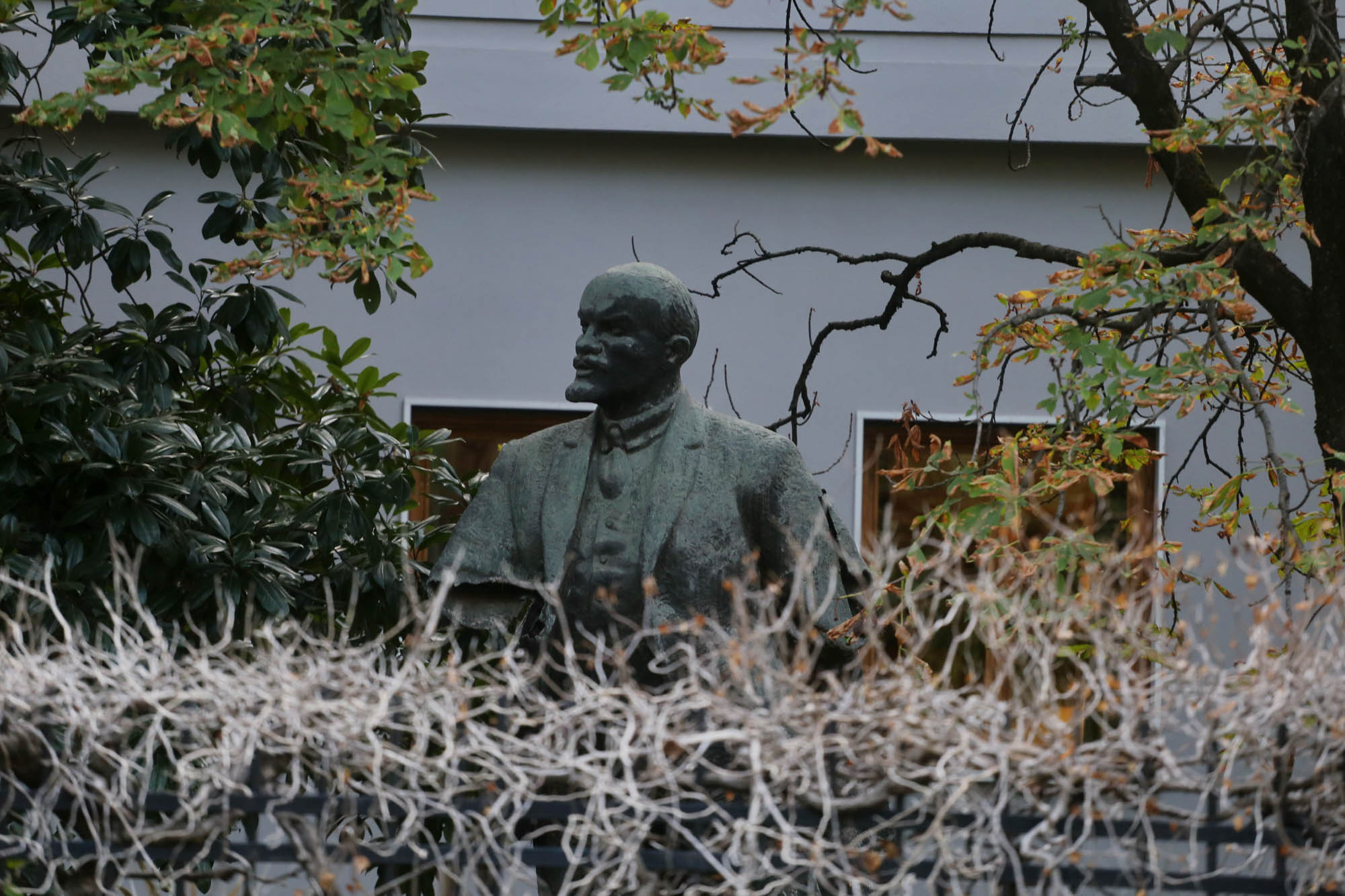
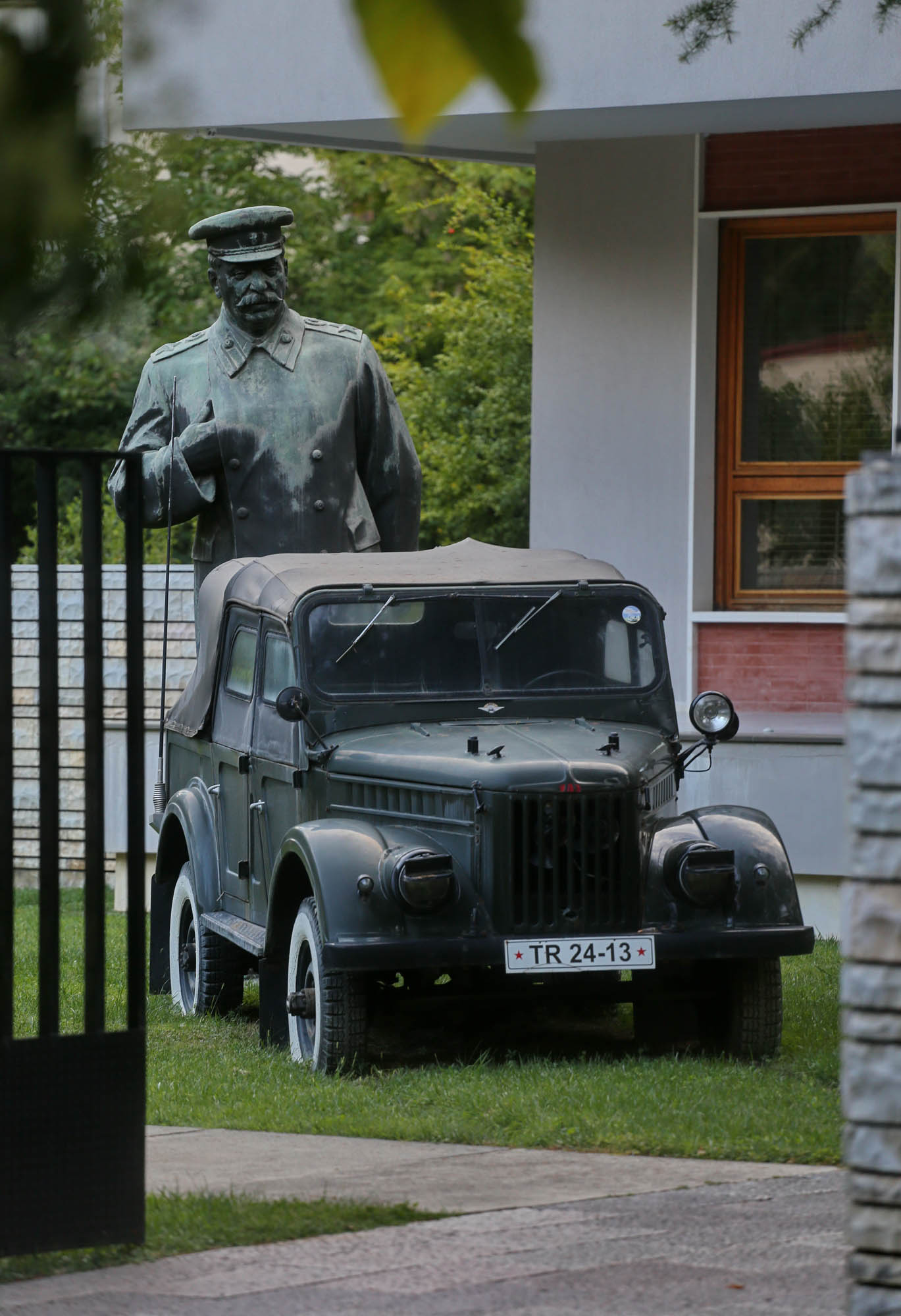
El régimen, sin embargo, aprendió algo: para legitimar la presencia de las estatuas adoptó un argumento tomado de la oposición. Según este, las estatuas se encuentran allí como una instalación artística. Extraño argumento en una época en que la definición del arte incluye cada vez más la interactividad, es decir, que no solo la mano del artista, sino también el ojo del espectador hace el arte. Aquí, escondidas en el jardín de la villa y manteniendo alejados a los posibles espectadores con fuerzas de seguridad, cumplen más bien la definición medieval del arte, donde bastaba con que Dios lo viera.

No sé si quiero ese nuevo y bello mundo, que a todas luces ya se prepara, en el que esta instalación volverá a recibir plena publicidad.
Wandering statues in Tirana

The spectre of communism still haunts Tirana—today not through ideology, but in the form of wandering statues with no place to call home.

Before the fall of socialism, monumental bronze statues of Stalin and Lenin dominated Tirana’s two central squares. Stalin stood on the main square, on the very pedestal where Skanderbeg now sits astride his horse. (As I once noted in a post, pedestals from toppled regimes have often served as ready-made foundations for the symbols of the new.) Lenin, meanwhile, gazed over Dëshmorët e Kombit, or the Avenue of the Martyrs of the People.

When the regime collapsed in 1991, protesters pulled the symbols of dictatorship from their pedestals. Unlike in Budapest in 1956, however, no one had the foresight to cut them into pieces. The literally fallen leaders were instead dragged into the back courtyard of the nearby Academy of Arts, in the shadow of the old royal palace and opposite the pyramid built as Enver Hoxha’s mausoleum. There they lingered through the turbulent decades of Albanian democracy, hoping that the people would one day return to the personality cult most in line with their traditions, and then their day would dawn again. Meanwhile they were out of sight, yet never entirely hidden. Anyone who knew the way could wander into the yard and photograph them.

The other large statue of Stalin on the right side of the picture stood not in the city center, but in a similarly prominent location, in front of the city hall of the southwestern Kombinat district, home to the large textile factories, as the photo below shows:

But then came Covid, and as in many places, Tirana changed unnoticed. Yesterday, when, after five years, I returned to the courtyard, the scene was unrecognizable. A skeletal concrete frame of a new building towered over the site; the statues had vanished. I asked the policeman across the street, but at the mention of their names his face froze, and he muttered in English—ironically—that he did not understand English.

Next to the bunker-museum dedicated to the victims of communism, a self-styled guide was lecturing to Italian tourists. He pointed me instead toward Mehmet Shehu’s villa.

Shehu is one of Albania’s most tragic figures: a mullah’s son, then a fiery revolutionary, volunteer in the Spanish Civil War, and fanatical disciple of Stalin. After 1944, as commander of the People’s Army, his ruthless purges won Enver Hoxha’s trust. Following the downfall of Koçi Xoxe, Shehu became interior minister in his place, and for decades remained the regime’s number two, a hardliner to the end. During one visit to Moscow, Khrushchev asked him what he considered Stalin’s greatest crime. Shehu, blunt as ever, replied: “That he didn’t get rid of you in time.” He also brokered the unlikely brotherhood between Albania and China, the last two Stalinist fortresses, a bond that lasted until communism itself collapsed.

But Shehu did not live to see that collapse. On December 17, 1981, he was found dead in his villa with a bullet wound in his chest. Officially, he had committed suicide. Soon after, his brother, wife, son, and two daughters were arrested; all died in prison during the 1980s. Only his younger son, Bashkim, survived, later insisting that his father had been assassinated for political reasons. He explained on television that behind the affair lay, as myths often suggest, a woman. Shehu’s brother had fallen in love with someone from the wrong family – relatives abroad in the U.S., others languishing in Albanian jails. When the feared secret police, the Sigurimi, asked Shehu to intervene, he simply replied: “He’s young. Let him love.”

After Shehu’s death, Hoxha smeared him in his 1982 book The Titoists, devoting entire chapters to portraying him as a Yugoslav, American, and Soviet spy, which confirms Bashkim’s claim, that his father was a victim of political murder.

Another, far more readable book about Shehu’s downfall and death appeared long after the events and the collapse of the regime: Ismail Kadare’s novel The Successor (Pasardhësi). Many regard it as perhaps the author’s greatest work. The reason for this is, of course, the personally lived experience of that era.

And yet, it is in Shehu’s garden that Stalin and Lenin have now found their final home. The last faithful servant shelters the last faithful statues. At the entrance of the service road to the villa a sign warns against entry, reinforced by the stern gestures of an armed guard. The villa, is allegedly used by the government for protocol events. As we watch, a black armored car rolls out, saluted by the guard. One wonders if the secret police still operate here – fitting company for the bronzed ghosts of Stalinism.

Though visitors are kept from the gate, the statues can still be seen and potographed from the neighboring park. Beneath the trees Lenin’s head juts out unmistakably; just inside the entrance stands Stalin, flanked by the Sigurimi’s infamous black car—a Soviet ZIS, now a collector’s antique. Do they still use it, one wonders, to fetch elderly communists, ensuring they feel immediately at home?

However, the regime must have learned something from the methods of the opposition. To justify the statues’ presence, the regime now claims they are merely an art installation. It is a curious argument in an age when art is increasingly defined by interactivity, when a work becomes complete only through the viewer’s eye. Hidden in a villa garden, guarded from public view, these statues fulfill instead a medieval definition of art – visible only to God.

But I am not sure I wish to see the brave new world, already in the making, in which this installation will return to full public view again.

Blood and milk. Oresteia Kapidani’s exhibition in Shkodër

The Marubi Photo Museum in Shkodër stands as one of the city’s most significant cultural institutions. Founded in 1856 by Pietro Marubbi, a Garibaldian exile from Italy, the photo studio, opening onto the main street, flourished under his adopted son and then his grandson for a century, until its nationalization in the 1950s. Today, its collection of nearly half a million pictures represents the most important historical photographic archive in Albania.

Alongside its historical holdings, the museum showcases contemporary Albanian photography. Currently on display is Shkodër-based photographer Orestia Kapidani’s 2004 series Milk and Blood, portraying the residents of the village of Mes, northeast of the city. The subjects appear individually or with their families on the heights above the Kir River, with the old Ottoman Mesi Bridge forming a striking backdrop.

Most of the figures are dressed in traditional attire and adopt a ritualized, almost sculptural posture for the camera, their faces closed, as though conscious of the legacy they are just leaving behind. From these images, one senses that their lives are lived according to similarly ritualized, traditional roles. The weight of endured hardships is etched into the faces of the elders, coupled with the same closedness through which they have weathered their trials.

The bridge, meanwhile, provides not only a visual anchor but also layers of historical resonance. It served as the inspiration for Nobel laureate Ismail Kadare’s novel The Three-Arched Bridge. In Kadare’s tale, the bridge is built by the community through their own labor, a hopeful gesture aimed at connecting them to the wider world, only to see the Ottoman army eventually march across it. The collaborative construction reflects several stories of effort and perseverance, loyalty and betrayal—most strikingly, the harrowing Balkan motif of entombing a human within the bridge to secure its stability.

In Kapidani’s photographs, each member of the community stands alone or with their immediate family, yet the bridge evokes the wider communal ties to which they belong, and whose preservation essentially requires them to entomb themselves within their closed, traditional roles.

Leche y sangre. Exposición de Oresteia Kapidani en Shkodër

El Museo Fotográfico Marubi en Shkodër destaca como una de las instituciones culturales más significativas de la ciudad. Fundado en 1856 por Pietro Marubbi, un exiliado garibaldino de Italia, el estudio fotográfico, abierto a la calle principal, prosperó bajo la dirección de su hijo adoptivo y luego de su nieto durante un siglo, hasta su nacionalización en la década de 1950. Hoy, su colección de casi medio millón de imágenes representa el archivo fotográfico histórico más importante de Albania.

Además de sus fondos históricos, el museo exhibe fotografía albanesa contemporánea. Actualmente se expone la serie Leche y Sangre, realizada en 2004 por la fotógrafa de Shkodër Orestia Kapidani, que retrató a los habitantes del pueblo de Mes, al noreste de la ciudad. Los sujetos aparecen individualmente o con sus familias en las alturas sobre el río Kir, con el antiguo puente otomano de Mesi como imponente telón de fondo.

La mayoría de personajes visten atuendos tradicionales y adoptan para la cámara una postura ritualizada, casi escultórica, con el rostro cerrado, como si fueran conscientes de la herencia que acaban de dejar tras de sí. De las imágenes se deduce que sus vidas transcurren según roles igualmente ritualizados y tradicionales. El peso de las penurias acumuladas se ha grabado en los rostros de los ancianos, junto al mismo hermetismo con el que han resistido sus pruebas.

The bridge, meanwhile, provides not only a visual anchor but also layers of historical resonance. It served as the inspiration for Nobel laureate Ismail Kadare’s novel The Three-Arched Bridge. In Kadare’s tale, the bridge is built by the community through their own labor, a hopeful gesture aimed at connecting them to the wider world, only to see the Ottoman army eventually march across it. The collaborative construction reflects several stories of effort and perseverance, loyalty and betrayal—most strikingly, the harrowing Balkan motif of entombing a human within the bridge to secure its stability.

El puente, por su parte, no solo ofrece un anclaje visual, sino que carga la escena con capas de resonancia histórica. Sirvió de inspiración a la novela El puente de tres arcos del premio Nobel Ismail Kadaré. En el relato de Kadaré, el puente es construido por la comunidad con su propio esfuerzo, un gesto esperanzador destinado a conectar a aquellos hombres y mujeres con un mundo más amplio y más abierto, solo para ver muy pronto cómo el ejército otomano acaba cruzándolo. La construcción colaborativa alberga múltiples historias de esfuerzo y perseverancia, de lealtad y traición —y de manera sobrecogedora, el inquietante motivo balcánico de emparedar a un ser humano en el interior del puente para asegurar su estabilidad—.

En las fotografías de Kapidani, cada miembro de la comunidad luce solo o con su familia más próxima, pero el puente evoca los lazos comunales más extensos a los que pertenecen y cuya preservación, en lo esencial, exige que ellos mismos se empareden dentro de los cerrados roles tradicionales.